Why This AI Moment Matters: Building Positive Futures Together Starts Now

Image credits: Jarl Schimdt | Unsplash
Have you ever really stopped to consider why AI, and this specific moment in time, matters so much for building positive futures together?
This was one of the big questions I explored during an Ask Me Anything session I hosted. It came from a comment on one of my social media posts. The person who asked it noted something more: there are still folks, including those in our own circles, who feel unprepared and may get caught flat-footed.
Do you notice this too? I know I do. And I believe how we move forward together will make all the difference. AI has been everywhere, in headlines, conversations, and decision rooms. I’ve been deep in this space, exploring it firsthand, studying its effects on people and the planet, and speaking with leaders around the world about what it means for their work, their families, and their futures. (Check out the list below this article for conversations on AI, health, parenting, leadership, and more!)
So why does this moment matter so much for AI and building positive futures?
I think the short answer is that we're at an inflection point that happens maybe once or twice in a century. As a result, the decisions we make right now could echo for decades, if not longer.
The longer answer requires us to understand what makes this moment fundamentally different from other technological shifts we've experienced.
Here are a few reflections on why this AI moment matters so much, and what it means for the futures we want to build:
1. Why this moment matters: We are in the exponential knee

Image credits: Google DeepMind | Unsplash
AI itself is not new. What is new is the scale, accessibility, and compounding impact of the systems being deployed. The tools being built today function as general purpose cognitive systems. They move beyond information retrieval into insight generation, autonomous action, and increasingly nuanced interaction with humans.
What I’ve described above is a generative threshold. For years, AI focused on recognition: detecting tumors, parsing speech, flagging anomalies, and so on. In contrast, generative systems create. They draft text. Design proteins. Model policies. Invent materials. Creation rather than prediction is what is likely to transform entire knowledge industries.
The power of this moment is also amplified by convergence. Cloud infrastructure has matured. Computers have become more affordable. Advanced biological tools and ubiquitous sensors are now widely available. When AI connects with real-time biology, climate systems, and global supply chains, feedback loops that once took years can now close in days. Change at this pace acts as an accelerant across nearly every domain.
2. This AI moment is a systems upgrade (not just a tool shift)
Don’t think of this AI moment as being like getting a new smartphone or a software upgrade. Instead, try thinking of the rise of AI as closer to the spread of electricity, the internet, or the printing press. AI doesn’t only empower us to do things “faster”; it reshapes how we think, decide, coordinate, and trust.
AI is already influencing culture, identity, work, and relationships. It affects how decisions are made. Who gets heard. What scales. And what is left behind. Whether we engage with it or not, it is shaping the systems we live inside.
Recognizing this fundamental systems upgrade changes the question. The AI moment is no longer about efficiency alone. It becomes about values, governance, and long-term impact.
3. Collective intelligence is the real opportunity

Image credits: Vitaly Gariev | Unsplash
The best-case future goes beyond smarter tools to the potential for deeper collective intelligence. AI can augment human wisdom, accelerate science, and surface insights that no single person or team could reach alone.
Imagine AI as scaffolding for collaboration. Connecting ideas across disciplines. Elevating underrepresented voices. Supporting purpose-driven work at scale. Imagine every team having access to a coach, a strategist, and a world-class researcher right when they need it.
This systems upgrade is how we move from individual productivity to shared progress.
4. Inaction is a choice with consequences
Not understanding AI does not mean you’re opting out. It means that you are choosing to cede decisions about work, data, education, and opportunity to someone else. Are the systems being built reflecting real human values (like yours?) or simply optimizing for speed, profit, and volume? When people disengage, the loudest voices and shortest incentives tend to dominate.
Every day, AI systems are making decisions about what content you see, which job applications get reviewed, how resources are allocated in your community, and what your children learn about the world. If you don't understand how these systems work, you can't advocate for better ones. You can't push back when they go wrong.
Understanding and using AI positions you to demand transparency and accountability. Perhaps most importantly, it also empowers you to help build alternatives that better serve human flourishing.
Here’s the bottom line: staying informed and involved is not optional if we care about agency, trust, and long-term resilience.
5. Don’t forget biology, systems, and care
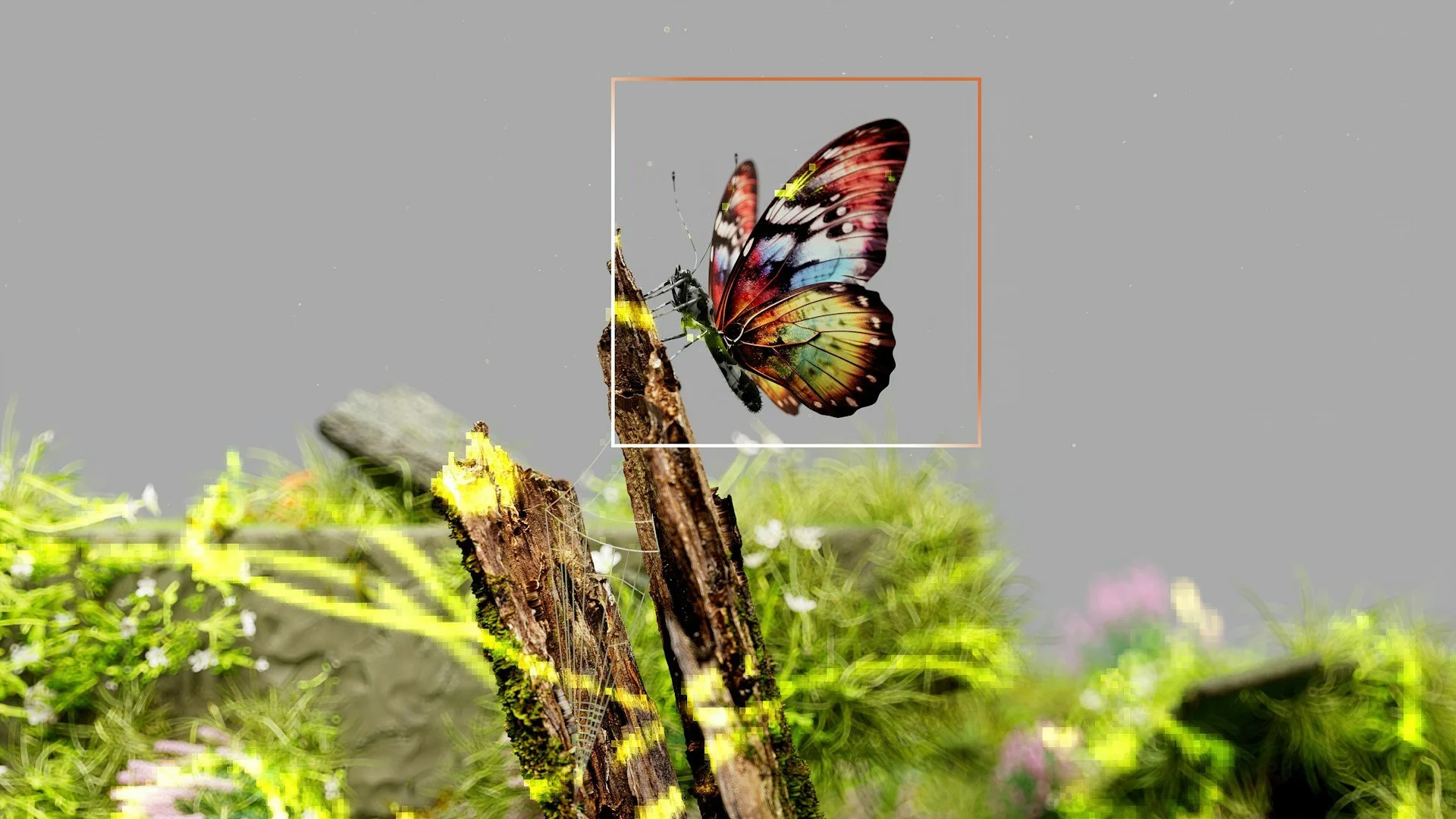
Image credits: Google DeepMind | Unsplash
If you've been following my journey, you know that I was trained as a biologist. That’s why I try to understand this moment by leaning into lessons from the Natural world … that’s four billion years of experimentation!
I find myself thinking about how ecosystems thrive through diversity and feedback loops - and how they fail through monocultures, brittleness, and unchecked growth. The same principles apply to the AI systems we're building. Positive futures include thriving people, a healthier environment, and resilient communities. Achieving these outcomes requires intelligence.
AI offers new forms of intelligence at unprecedented scale. Yet intelligence without intentionality carries real risk. Systems must be designed to listen, align with human values, and earn trust over time, not simply perform tasks faster or cheaper or more profitably.
When it comes to AI, care cannot be an afterthought. It has to be designed from the start, embedded into how systems learn, interact, and make decisions. We need diverse voices in their creation, redundant safeguards against failure, and tight feedback loops between impact and design. We need to build systems that enhance our collective intelligence rather than replace human judgment.
Looking Ahead

Image credits: Jason Leung | Unsplash
Back to the big question: Why does this AI moment matter? Especially in building positive futures?
I believe that this moment matters because the window is open. Foundational decisions about infrastructure, norms, and imagination are being made right now. These choices will shape how AI evolves for decades.
If you care about the future of your family, your community, or this planet, you need to care about what AI is becoming. The future is still being written, and this is our chance to be intentional authors of what comes next.
If this article sparked your curiosity, you might want to explore these too:
💡 Why People Matter in the Age of AI | Read here
💡 How Should We Prioritize AI Opportunities in Healthcare? | Read here
💡 What’s Next for (Open)AI? A Fireside Chat with Sam Altman | Read here
💡 How to Prepare Your Kids for the Future—Revisited for the Age of AI | Read here
💡 Now and Then: How AI Enabled a Beatles Masterpiece Across Time | Read here
💡The Sustainability Questions Policymakers Should Be Asking About AI | Read here
💡 How Using AI Can Increase Cognitive Work and Support Better Brain Health | Read here
💡 What Global Leaders Need to Understand About AI, SynBio, and Building Better Futures | Read here
About Tiffany

Dr. Tiffany Vora speaks, writes, and advises on how to harness technology to build the best possible future(s). She is an expert in biotech, health, & innovation.
For a full list of topics and collaboration opportunities, visit Tiffany’s Work Together webpage.
Get bio-inspiration and future-focused insights straight to your inbox by subscribing to her newsletter, Be Voracious. And be sure to follow Tiffany on LinkedIn, Instagram, Youtube, and X for conversations on building a better future.
For the Curious and the Voracious
Subscribe to Be Voracious, Tiffany’s newsletter, for thoughtful conversations on science, innovation, and leadership, delivered straight to your inbox.

Buy Tiffany a Cup of Coffee | Image credits: Irene Kredenets via Unsplash.
Donate = Impact
If this article sparked curiosity, inspired reflection, or made you smile, consider buying Tiffany a cup of coffee!
Your support will:
Spread your positive impact around the world
Empower Tiffany to protect time for impact-focused projects
Support her travel for pro bono events with students & nonprofits
Purchase carbon offsets for her travel
Create a legacy of sustainability with like-minded changemakers!
Join Tiffany on her mission by contributing through her Buy Me a Coffee page.