Leadership Lessons from Penguins: What Penguins Can Teach Us About Shared, Patient, and Future-focused Leadership
Guest Blog
By Anna Frebel, April 2026
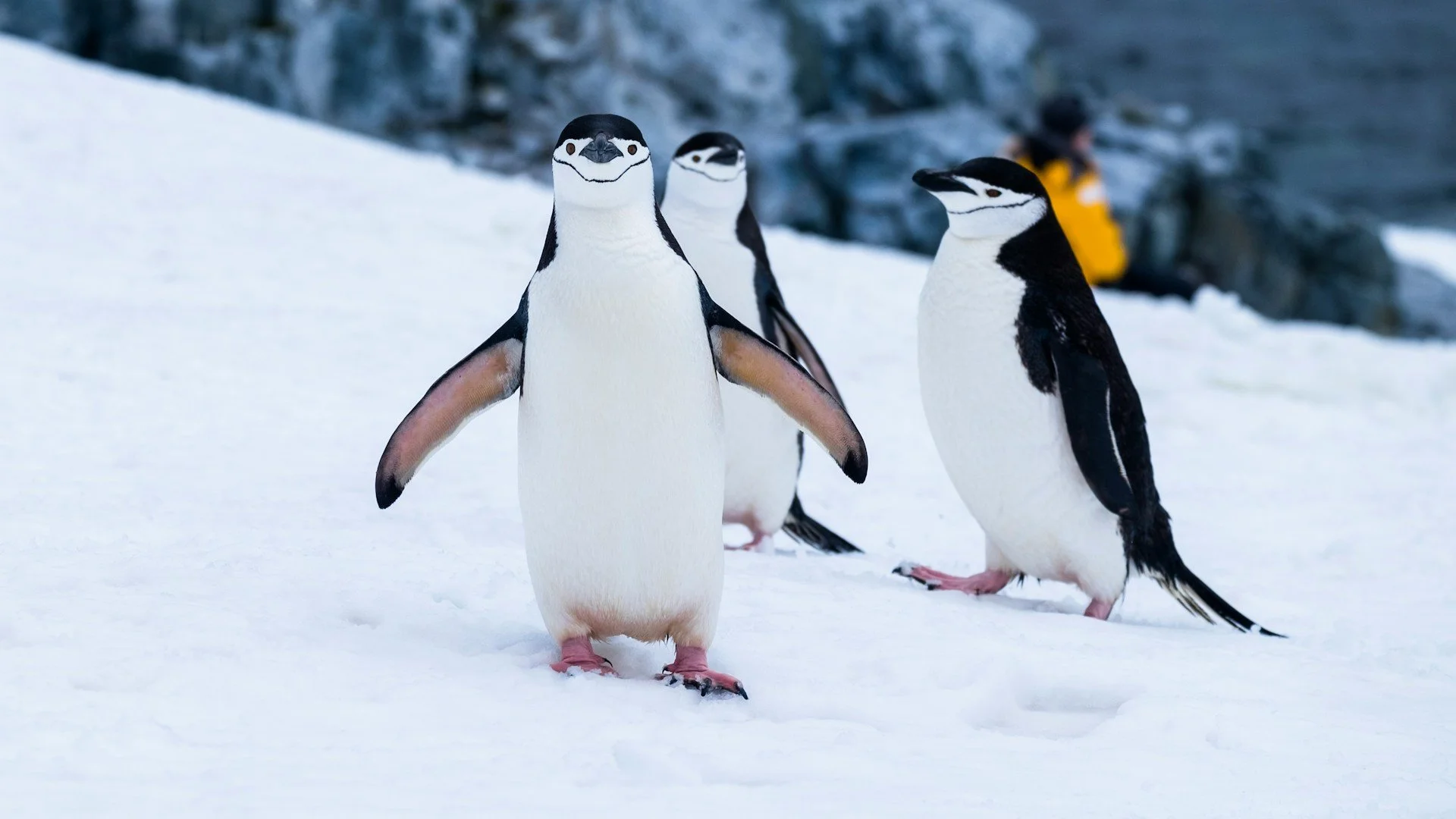
Chinstrap penguins | Image credits: Derek Oyen |Unsplash
On World Penguin Day, we celebrate penguins for what makes them so charming — their friendly faces, their waddling gait, their improbable presence in one of the harshest places on Earth, Antarctica. In 2023, I was lucky enough to spend three weeks around the Antarctic peninsula watching hundreds of penguins up close. What first looked like simple charm soon began to look like a lesson in how to lead.
I traveled to Antarctica with the global STEM women’s leadership initiative Homeward Bound. Along with 109 other women and non-binary people, I joined the voyage to learn about the concept of collaborative leadership and to experience something much harder to define: awe. Not the fleeting kind, but the kind that reorients you. The deep kind that makes you ask: What type of leadership does our fragile planet actually require?
Two years later, what has stayed with me isn’t what I expected. Some of the most lasting lessons didn’t come from sitting in a classroom, but from the inner growth work of learning to notice more, to speak less quickly, and to let go of old habits I had mistaken for strength and leadership.
The Discipline of Waiting
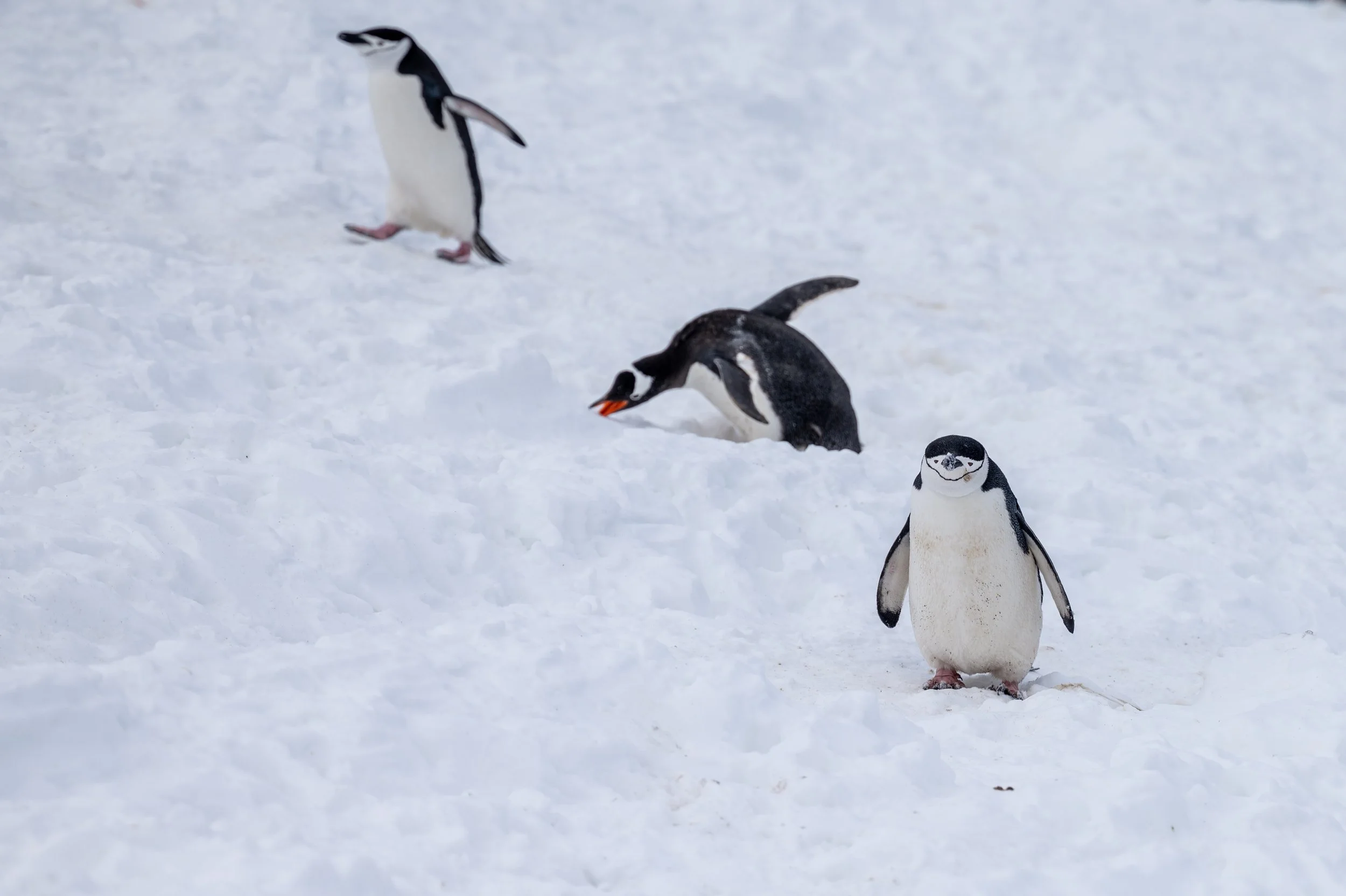
Image credits: Heidi Victoria, Official photographer during the Homeward Bound Antarctic Voyage in 2023
At the edge of an ice shelf, I observed a group of penguins gathering. They waddled forward, paused, lifted their heads and scanned the water below. One of them moved right to the edge, then stopped. The others, ready to dive, just watched. The whole group seemed to be holding its breath. After a long pause, one penguin finally committed to the dive. Only then, the others quickly followed.
It was a small moment that I nearly missed. From a distance, it looked like indecision. Yet watching that collective pause before action, I began to see a kind of leadership we don’t talk about often: patient, shared, and grounded in awareness rather than urgency. Because not every moment calls for action. Some demand restraint. Penguins remind us that waiting is not the absence of action; it is part of the action.
Good leadership and decision making, it turns out, includes knowing when not to jump.
💡 Bonus! Watch the actual penguin gathering moment here.
Leadership is a Practice, Not a Penguin (or a Person)
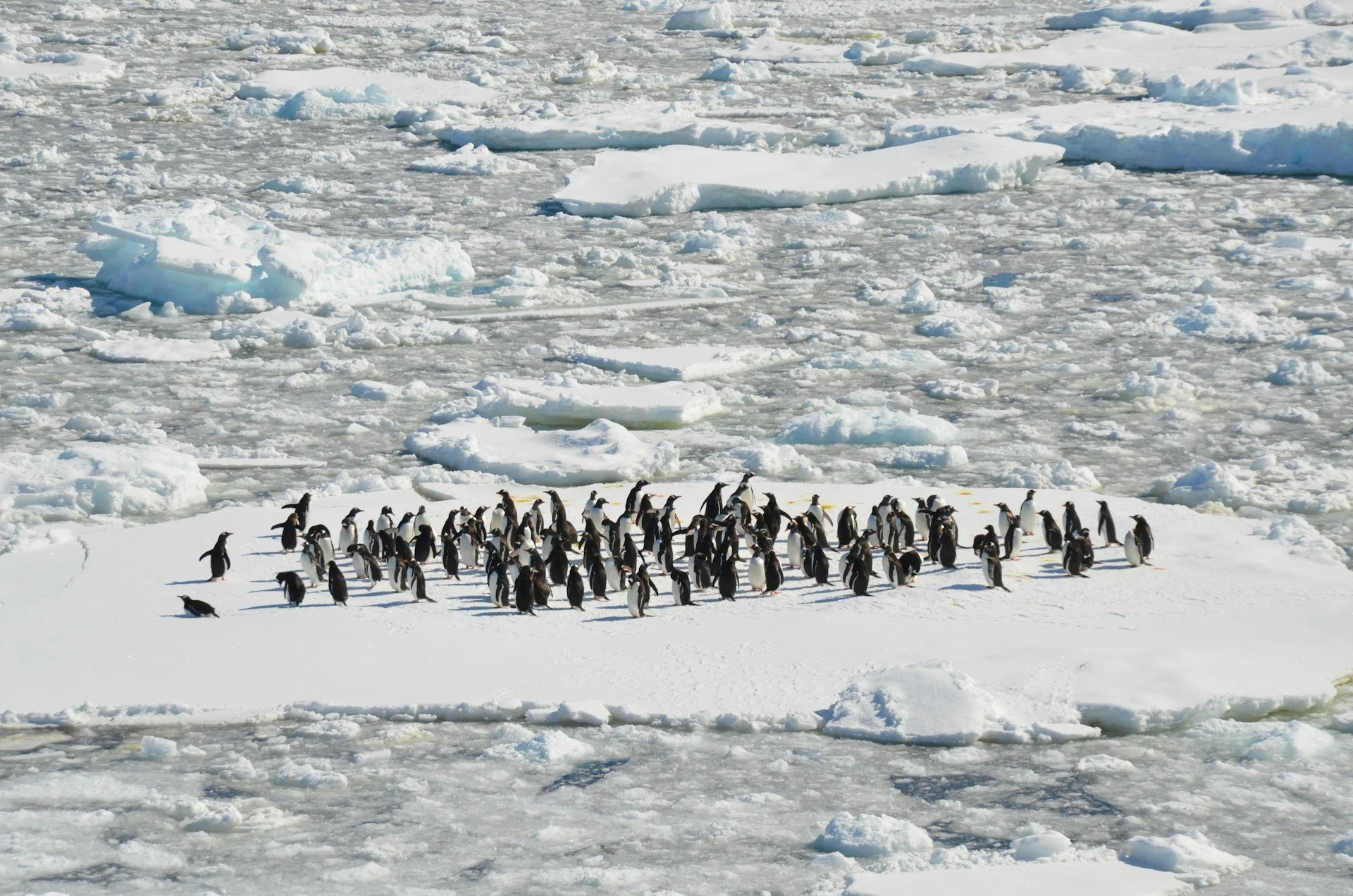
Image: A bustling penguin colony on a floating ice floe | Image credits: Danielle Barnes | Unsplash
At first glance, a penguin colony is busy, noisy, smelly and chaotic. During the breeding season, dozens of individuals form a pod to build their nests close to each other. There is constant chatter and calling, nesting activities, and, of course, the inevitable stealing rocks from neighboring nests, as well as traffic in and out of the pod. During our daily outings, I spent hours just watching them, and over time, a different pattern emerged from the chaos.
There is no central authority in a pod. No single leader directing the group. By most of our definitions, this should not work. And yet it does.
Penguins rotate responsibilities. They take turns breeding the egg and feeding their young. They trample paths through the snow for common usage, they come from and go to the water in groups, they do social visits to other pods, and they cluster together against the cold and the wind. What looks like disorder at first begins to look more like coordination without command. Leadership, in this context, is not a title, a fixed role, or with a particular penguin. It is a behavior that is shared and situational. It shifts depending on what the moment requires.
As an astronomer and physics professor, I also teach several STEM leadership courses at MIT. What I’ve learned is that leadership, and what it asks of us, is often difficult to grasp because we are so deeply conditioned to associate it with position: the person in charge, the decision-maker, the one with authority. But in complex systems, whether that is ecosystems, research teams, or organizations, that model breaks down quickly. What works instead is something closer to what penguins practice: mutual awareness, distributed responsibility, and the ability to step forward or step back as needed, without judgment.
💡 Bonus! Watch a video of “penguin highway” here.
Leading with the Horizon
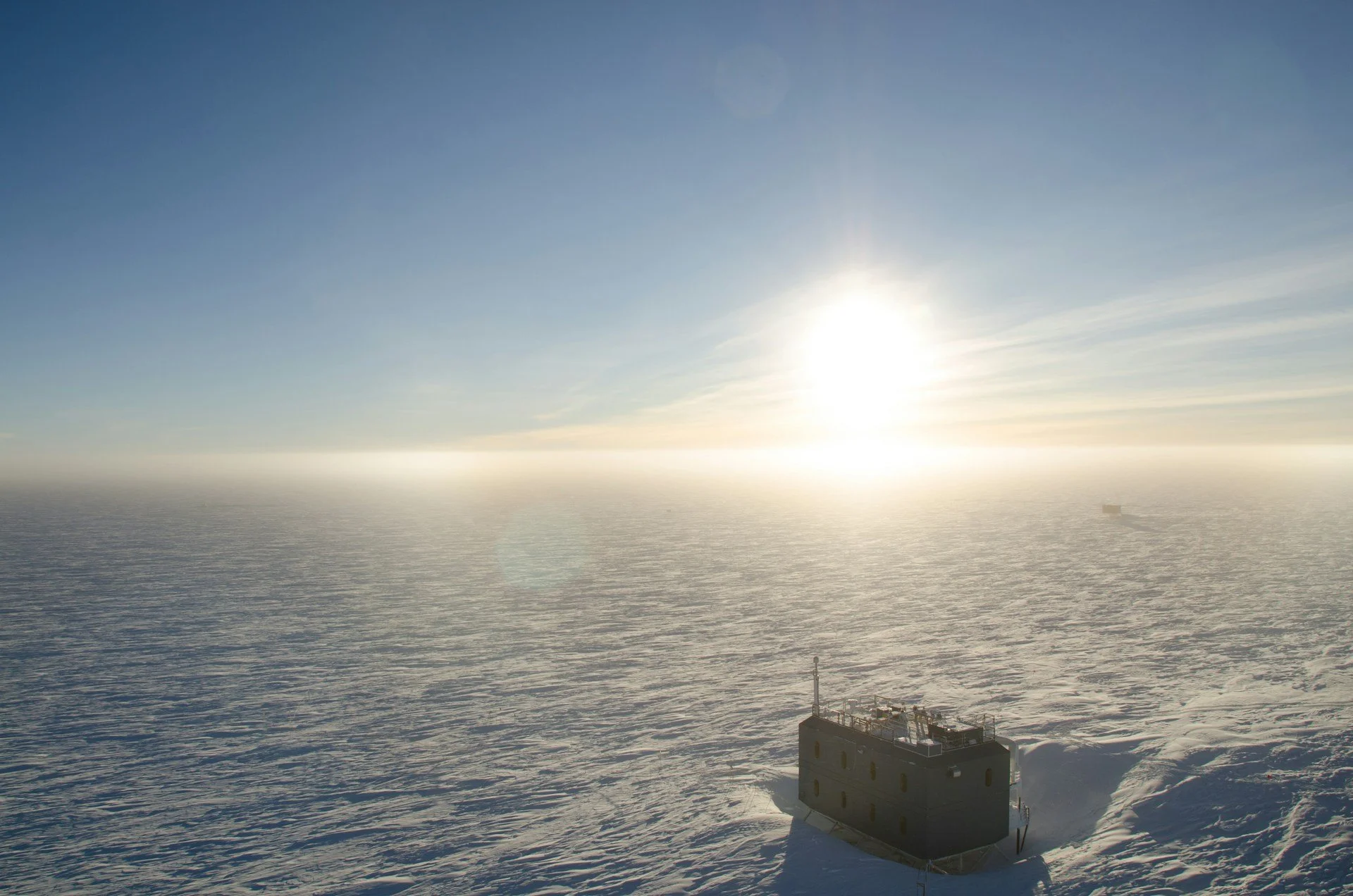
Image: The Atmospheric Research Observatory at the South Pole, set against the vast Antarctic horizon | Image credits: NOAA | Unsplash
Antarctica also changes how you think about scale. There are very few visual anchors. No trees, no buildings, just ice, snowy mountains, sky, and the distant line where they meet. The horizon becomes your reference point. The space that is created this way was unfamiliar but clarifying.
In contrast, much of modern leadership is driven by short horizons centered around immediate outputs and rapid feedback loops. These are not inherently bad but they can narrow perspective. Sometimes dangerously so.
What would change if we led with the horizon in mind?
Out there, the eye keeps returning to the faint line where ice meets sky. It is hard to look only at your feet. That shift in scale changes the questions. Not just what works now, but what lasts, and what will meaningfully move us forward. When I think about the purpose of leadership now, especially in the context of our planet, it feels inseparable from this idea. It asks for a different kind of attention: Less reaction, more orientation.
Penguin Leadership
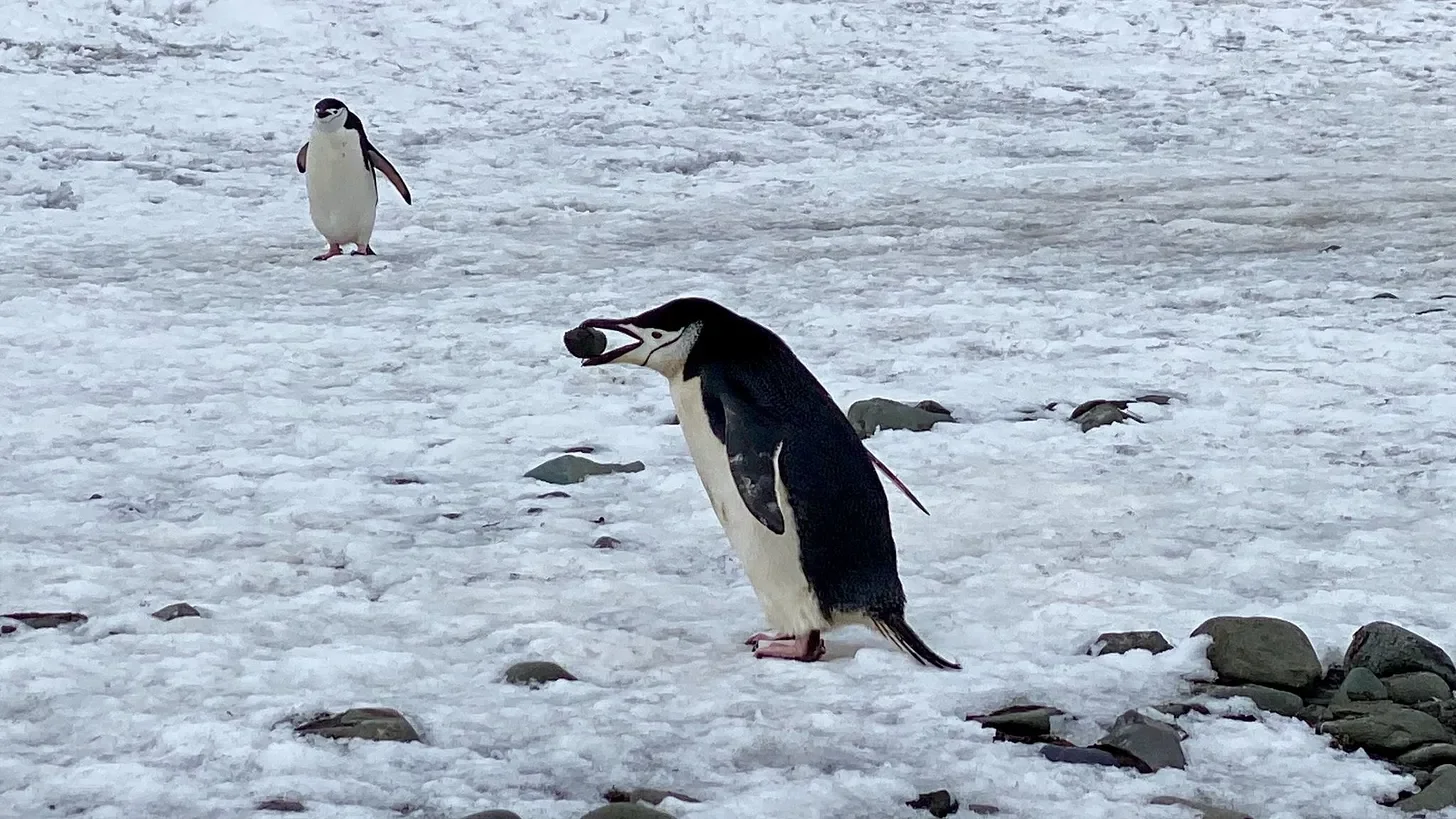
Image: A chinstrap penguin carrying a nesting stone | Image provided by Dr. Anna Frebel
The reason I went to Antarctica was not just to learn leadership frameworks. It was to experience the scale and fragility of the global system of our planet, our shared home in the cosmos. Standing there, watching penguins navigate their environment with a kind of grounded intelligence, the connection became clearer.
Leadership is not about control. It’s about relationships – with each other, with the systems we move through, and with the environment we depend on. On the ice, nothing survives alone for long. The lesson was not abstract. It was everywhere around me.
We need more of that kind of relational leadership. Leadership that is shared rather than centralized, with room for waiting and observing not just acting, and guided by the horizon, rather than just the immediate.
In all of my work, ranging from teaching astrophysics and STEM leadership, to talking with school children about Antarctica, to creating small things like penguin postcards that carry these stories outward, I find myself returning to the same question: What would it look like to lead in a way that is truly aligned with a future this planet can sustain?
Penguins don’t answer that question for us. But they do offer a compelling model. They remind us that effective leadership can be quiet, distributed, patient, and attuned.
Sometimes the most important move is not to charge ahead, but to stand at the edge, look out across the water, and wait until the moment is right to move. Together.
About Anna
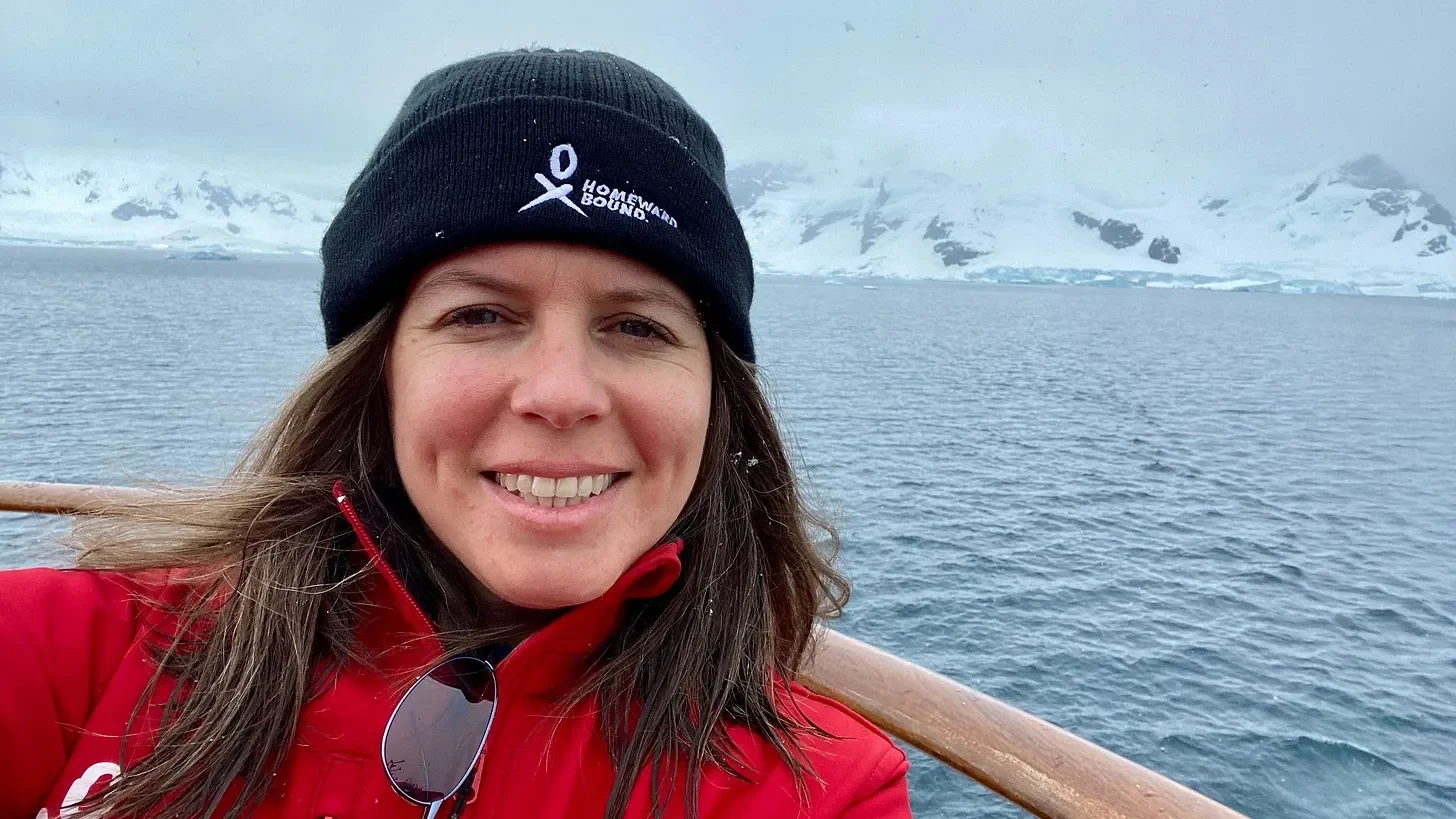
Dr. Anna Frebel is a Professor of Physics at MIT and an astrophysicist known for her work on the oldest stars in the universe. She co-founded MIT’s program in Leadership and Professional Strategies and Skills. Through her research, teaching, and global initiatives like Homeward Bound, she connects science, exploration, and leadership development.
Anna shares her work through her books, website, and social platforms (LinkedIn, Instagram, and YouTube), making science and leadership more accessible.
About Tiffany

Dr. Tiffany Vora speaks, writes, and advises on how to harness technology to build the best possible future(s). She is an expert in biotech, health, & innovation.
For a full list of topics and collaboration opportunities, visit Tiffany’s Work Together webpage.
Get bio-inspiration and future-focused insights straight to your inbox by subscribing to her newsletter, Be Voracious. And be sure to follow Tiffany on LinkedIn, Instagram, Youtube, and X for conversations on building a better future.
For the Curious and the Voracious
Subscribe to Be Voracious, Tiffany’s newsletter, for thoughtful conversations on science, innovation, and leadership, delivered straight to your inbox.

Buy Tiffany a Cup of Coffee | Image credits: Irene Kredenets via Unsplash.
Donate = Impact
If this article sparked curiosity, inspired reflection, or made you smile, consider buying Tiffany a cup of coffee!
Your support will:
Spread your positive impact around the world
Empower Tiffany to protect time for impact-focused projects
Support her travel for pro bono events with students & nonprofits
Purchase carbon offsets for her travel
Create a legacy of sustainability with like-minded changemakers!
Join Tiffany on her mission by contributing through her Buy Me a Coffee page.