Bespoke Biotech? A Dog, a Diagnosis, and a Radical Experiment with AI
Image credits: MohammedElAmine | Adobe Stock
There is a story circulating right now that, at first glance, feels like a curiosity, a one-off that you might share casually over the dinner table and then move on. Here’s the headline: An Australian data scientist and tech entrepreneur named Paul Conyngham, with no formal background in biology, used tools like ChatGPT and AlphaFold alongside scientific literature and input from trained biologists and veterinarians to design a personalized cancer vaccine for his dog, Rosie.
Go a bit deeper, though, and some interesting signals pop up.
Conyngham paid several thousand Australian dollars out of pocket to have Rosie’s tumor DNA sequenced (meaning that the ACTG code specific to the tumor was determined). This is an important thing to note: the effort started from real biological data. While DNA sequencing is becoming remarkably cheap, it’s not free, at least not to consumers. More accessible, yes; fully democratized, no. Also, Conyngham recruited the help of researchers at the University of New South Wales. Trained scientists, not garage biohackers.
(Sidebar: I think my favorite part of the story is Conyngham reassuring the researchers that he could handle the data analysis. I had a similar conversation with a well-meaning but critically misinformed rep from a biotech company who tried to warn me that “DNA data is complicated.” Cue the uncomfortable silence in a room full of people who knew that I had designed relevant analysis pipelines back in the early days of high-throughput sequencing. A key mindset is a willingness to leverage the talents and resources of unexpected partners.)
Expanding the Circle: Who Gets to Participate in Building Innovation?

Image credits: Chekart | Adobe Stock
Working from Rosie’s tumor sequencing data, the team identified neoantigens—mutations unique to her specific cancer—and used them to create a bespoke mRNA vaccine intended to train the dog’s immune system to recognize and attack the tumor. This is the conceptual approach being explored at the frontier of human cancer immunotherapy (more technical detail here), but translated into a deeply personal context and executed, in part, by someone outside the traditional boundaries of the field.
In other words, this story raises an important question—one that feels increasingly central to the future of science and medicine. Who gets to participate in building innovation, including biomedical innovation?
For most of modern history, biology has been something we observed and, occasionally, intervened in. Over the past few decades, it has become something we can engineer. And now, it is becoming something we can design, at the very least at the level of framing problems, navigating possible solutions, and assembling the pieces required to act. The underlying biology hasn’t changed; the logic of neoantigens and immune activation remains the same. What has changed is the interface.
AI as Scaffolding for Complex Science
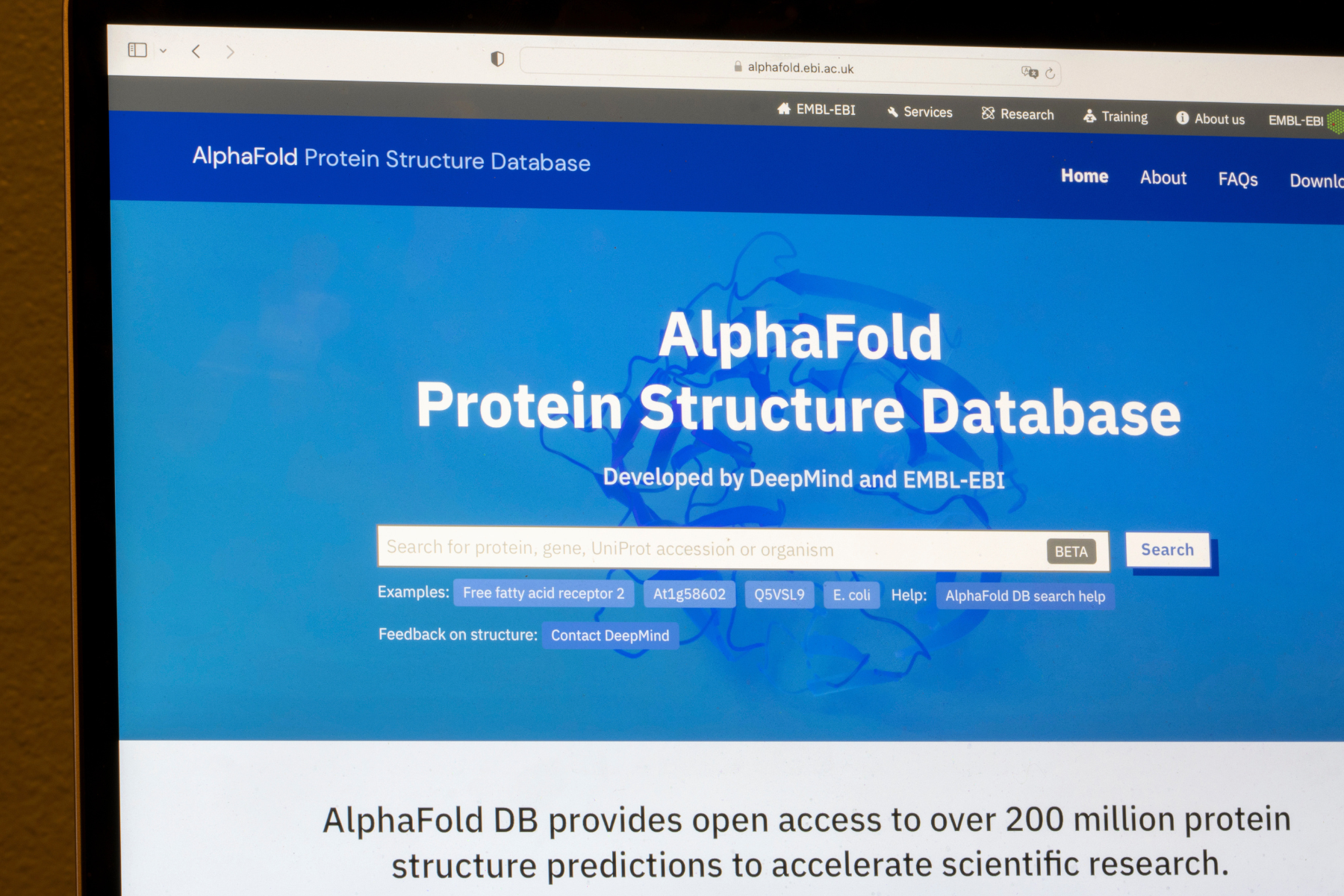
Image credits: Tada Images | Adobe Stock
Tools like ChatGPT do not replace deep expertise, nor do they eliminate the need for trained practitioners. What they do instead is lower the activation energy required to engage with complex domains. These tools make it possible to traverse unfamiliar terrain with some degree of orientation, to connect ideas across disciplines, and to move from “I don’t know where to begin” to “I can begin to see how this might work.” I think of these tools as cognitive scaffolding that expands who can meaningfully participate in technically sophisticated processes.
We have seen early versions of this shift before. Patient communities organizing to accelerate research in rare diseases. Technologists contributing to protein folding problems (plus nonscientist gamers more than a decade ago). Individuals using open data and accessible tools to build diagnostics or models that once required institutional backing.
But this example feels like a threshold moment, because it closes a loop. The same individual who sought to understand the problem was able, in collaboration with others, to participate in designing and implementing a potential intervention.
It would be easy to romanticize this as a story of the lone innovator, empowered by AI and operating outside the system. That framing is both incorrect and incomplete. This effort depended on veterinarians, on biologists, and on decades of foundational work in immunology and mRNA therapeutics. It rests on an immense substrate of collective knowledge and sophisticated infrastructure. At the same time, I think this story is more than a flashy anecdote. The outcome is not a clinical trial, and it does not establish efficacy in any rigorous sense, but the signal does not depend on whether this particular intervention ultimately proves successful.
Lower Barriers, Not Lower Standards
Image credits: National Institute of Allergy and Infectious Diseases | Unsplash
The signal is that the boundaries around participation are shifting. The distance between curiosity and contribution is shrinking in ways that are subtle but profound. Biology is beginning to behave less like a closed domain, accessible only through long and formalized training pathways, and more like a system that—while still demanding expertise—can be approached, explored, navigated, and even partially shaped by a broader set of actors.
That shift brings with it a different set of questions, ones that extend beyond the technical into the social and ethical. As the tools of design become more widely accessible, how do we think about responsibility and oversight? What does safety look like in a world where the capacity to engage with biology is more distributed? How do we preserve rigor without constraining the kinds of exploratory, boundary-crossing efforts that often drive innovation?
Looking Ahead: Participatory and Programmable Biology
Image credits: Crocothery | Adobe Stock
The story of one dog and one vaccine does not answer these questions, nor should it. But it does make them more immediate. It suggests that we are not only entering an era of programmable biology, but also an era in which the set of people who can meaningfully engage with that programmability is expanding. And that, in turn, may prove to be as transformative as any single therapeutic advance. Even for someone as lovable as Rosie.
About Tiffany

Dr. Tiffany Vora speaks, writes, and advises on how to harness technology to build the best possible future(s). She is an expert in biotech, health, & innovation.
For a full list of topics and collaboration opportunities, visit Tiffany’s Work Together webpage.
Get bio-inspiration and future-focused insights straight to your inbox by subscribing to her newsletter, Be Voracious. And be sure to follow Tiffany on LinkedIn, Instagram, Youtube, and X for conversations on building a better future.
For the Curious and the Voracious
Subscribe to Be Voracious, Tiffany’s newsletter, for thoughtful conversations on science, innovation, and leadership, delivered straight to your inbox.

Buy Tiffany a Cup of Coffee | Image credits: Irene Kredenets via Unsplash.
Donate = Impact
If this article sparked curiosity, inspired reflection, or made you smile, consider buying Tiffany a cup of coffee!
Your support will:
Spread your positive impact around the world
Empower Tiffany to protect time for impact-focused projects
Support her travel for pro bono events with students & nonprofits
Purchase carbon offsets for her travel
Create a legacy of sustainability with like-minded changemakers!
Join Tiffany on her mission by contributing through her Buy Me a Coffee page.