When Science (Fiction) Is Human: Reflections on Project Hail Mary
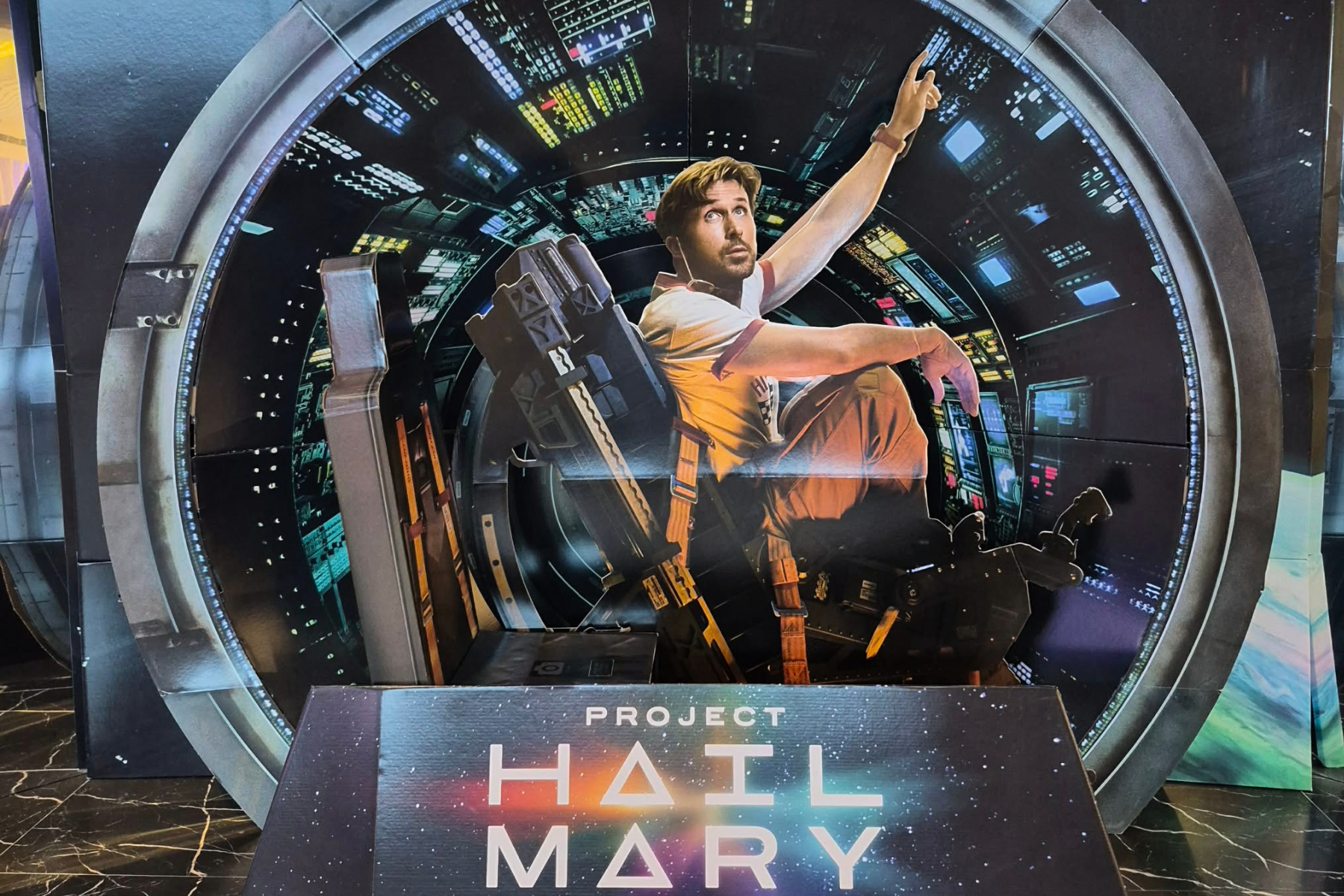
Image: Cinema display for Project Hail Mary featuring promotional artwork by Amazon MGM Studios.
There’s a box office phenomenon happening right now, and it’s not a superhero blockbuster. It’s not a story about technology in the way we’ve come to expect from big-budget science fiction. At its core, Project Hail Mary is about something far more fundamental: relationships as a technology for survival. That’s why it’s enjoying such success at the box office—and why you should go see it!
Reflections on Project Hail Mary
I’ve long been a fan of Andy Weir’s novels. I read Project Hail Mary when it first came out, and both my son and I loved it. (Yes, both the book and the movie are suitable for pre-teens and up.) I haven’t reread the novel recently, so I can’t speak to it line by line, but the film adaptation captured the spirit of the book in a way that felt true to me.
The premise is straightforward and immediately compelling. (I’m doing my best to avoid spoilers, I promise!) The sun is dimming, and the cause appears to be biological. No one fully understands what is happening or how to stop it, and so, in a long-shot attempt to save humanity, a molecular biologist from the Bay Area is sent into space to figure it out.
With a setup like that, what’s not to love? I admit my bias.
Going Beyond the Technical
What stayed with me was not the depiction of the science, impressive as it is, but the realization that this is not a movie about technology. It is a movie about relationships.
We often tell stories about science and innovation as though the primary challenge is technical: a problem to be solved through intellect, data, and ingenuity. But if you’ve ever worked in a laboratory, or participated in any kind of meaningful research or build effort, you know that the technical problem is rarely the hardest problem.
The real challenge lies in working with other people, aligning under pressure, making decisions in the face of incomplete information, and learning from repeated failures when the stakes are uncomfortably high.
What Project Hail Mary does so effectively is to push that idea to its logical extreme. Without getting into spoilers, the central dynamic of the story involves learning how to work with someone who is fundamentally unlike you. There is no shared language, no shared assumptions, no shared context. And yet there is a problem that neither party can solve alone. The question becomes not simply how to understand the problem, but how to understand each other well enough to collaborate on a solution.
Confession: This is one of the reasons I have always been drawn to stories about aliens and zombies. They are rarely about the aliens or the zombies themselves. They are about us. In these stories, our usual ways of communicating and organizing break down, forcing us to confront what it actually takes to cooperate across difference. A beautiful example is the devastating sci-fi film Arrival, where the emotional and intellectual heart of the story lies in the act of learning how to communicate across an unbridgeable divide. Project Hail Mary operates in a similar space, with a lot more humor.
The Lived Experience of Doing Science
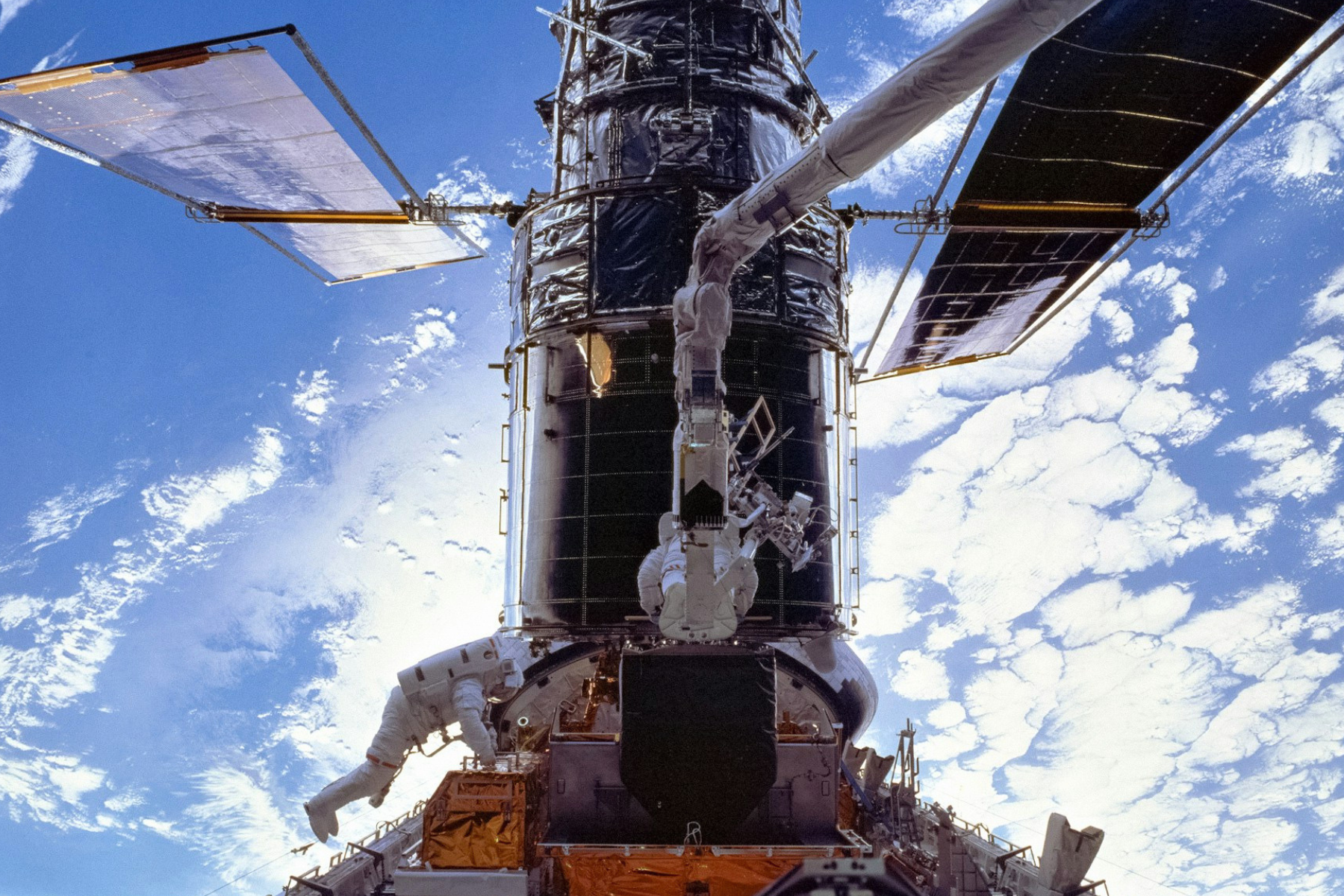
Image credits: NASA Hubble Space Telescope | Unsplash
At the same time, I was deeply satisfied by how this film captured the lived experience of doing science. For reasons that I still don’t understand, cultures around the world—sometimes including science itself—treat the process of science as if it is rational, clean, and linear. In reality, it is anything but. Science is emotional. It is uncertain. It is phenomenally messy. It involves persistence, intuition, and a willingness to sit with discomfort for extended periods of time.
Watching the film brought back a wave of memories from my own time in the lab, both the joy of discovery and the frustration of experiments that refuse to work. I was surprised by how much I miss both. The last time I had such a visceral reaction to a laboratory setting on screen was while watching World War Z. (Also a great read, IMO, but not so much commonality between the book and the movie.) There’s a scene in which Brad Pitt’s character moves quietly through a lab, trying not to awaken any lurking zombies. It brought me back to late nights in the lab when I knew I wasn’t the only person in the building … but I didn’t know where the others were in the silence. I literally had nightmares for weeks because of that scene! Project Hail Mary evokes a different emotional register, but it captures something equally real about what it feels like to be immersed in the process of figuring something out.
Constraint as a Catalyst for Creativity

Image credits: Ivan Diaz | Unsplash
The film also does a nice job of portraying innovation under constraint. The challenges that arise are not purely technical; they are layered, involving relational tensions, environmental limitations, and the simple fact that space is, and always will be, unforgiving. There is a clear progression of complications, each one requiring not just knowledge but creativity and adaptation. Even when my science brain started shouting (You just woke up from a coma and you can climb ladders?? That’s not how stasis works!! Would someone please balance that centrifuge?!), those small inconsistencies were not enough to pull me out of the story. I remained engaged, which is ultimately the test of whether a film is working. And yes, as I was driving home, I noodled on the experiments that I would run first if someone snatched me from my neighborhood and dropped me in a strange bio lab to work on aliens.
You don’t need to be a scientist or even a scifi fan to enjoy Project Hail Mary. The structure is clear, the pacing effective, and the performances strong. The filmmakers have done a splendid job capturing both the coldness and the beauty of space in a way that showcases why we are drawn to explore it in the first place.
And perhaps most impressively, I think the film succeeds in bringing to life something we fundamentally do not understand and maybe can’t even imagine: what non-Earth intelligence could be like. I suppose I could argue that there’s too much anthropomorphism here, but I have to admit that it serves a purpose. It allows the story to meet us where we are so that we can engage with its deeper ideas.
Building the Future: The Power of Connection, Trust, and Collaboration
Image credits: Alina Grubnyak | Unsplash
What lingers for me is not any particular plot point or visual sequence from Project Hail Mary. It is the reminder that at the edge of the unknown, what matters most is not just intelligence, but our ability to connect. Whether we are working with other people, with machines, or with something entirely unfamiliar, our success depends on our capacity to build trust, to communicate across gaps in understanding, and to collaborate toward something larger than ourselves.
I believe that we humans are indeed capable of solving many of the big, nasty scientific and technical challenges of the coming decades. The more uncertain question is whether we are capable of the relationships required to turn those solutions into reality.
And perhaps that is why stories like Project Hail Mary resonate. Not because they show us the future of technology, but because they show us, more clearly, who we are when we are asked to build that future together.
About Tiffany

Dr. Tiffany Vora speaks, writes, and advises on how to harness technology to build the best possible future(s). She is an expert in biotech, health, & innovation.
For a full list of topics and collaboration opportunities, visit Tiffany’s Work Together webpage.
Get bio-inspiration and future-focused insights straight to your inbox by subscribing to her newsletter, Be Voracious. And be sure to follow Tiffany on LinkedIn, Instagram, Youtube, and X for conversations on building a better future.
For the Curious and the Voracious
Subscribe to Be Voracious, Tiffany’s newsletter, for thoughtful conversations on science, innovation, and leadership, delivered straight to your inbox.

Buy Tiffany a Cup of Coffee | Image credits: Irene Kredenets via Unsplash.
Donate = Impact
If this article sparked curiosity, inspired reflection, or made you smile, consider buying Tiffany a cup of coffee!
Your support will:
Spread your positive impact around the world
Empower Tiffany to protect time for impact-focused projects
Support her travel for pro bono events with students & nonprofits
Purchase carbon offsets for her travel
Create a legacy of sustainability with like-minded changemakers!
Join Tiffany on her mission by contributing through her Buy Me a Coffee page.