
Image credits: Google DeepMind | Unsplash
Over the past few months, I’ve been running strategy workshops that ask decidedly non-space companies to think like they’re going to Mars. Strip away easy resupply, abundant resources, forgiving margins, and all the other ways we get to cheat here on Earth, and some surprisingly useful business principles emerge.
I’ve been wanting to boil those conversations down to their essence. Naturally, I’ve arrived at a scientific measure of strategic insight: Could I put it on a t-shirt?
What Biology and Mars Can Teach Us About Business Strategy
For this t-shirt design sprint, I’ve turned to two of my favorite sources of inspiration: biology and Mars. Biology because it has had roughly four billion years to figure out a few things about surviving, adapting, and getting jobs done under constraints. Mars because there’s something wonderfully clarifying about trying to keep humans alive somewhere that basically wants to kill them.
Here on Earth, abundance lets mediocre systems work surprisingly well. We compensate for waste with more raw materials, fragility with inventory, poor repairability with replacement, and inefficient processes with more energy, labor, compute, or capital.
Optimization and Constraint

Image credits: Rick van der Haar | Unsplash
Those workarounds (which, let’s be honest, are cheats) stay invisible as long as they work. Then they don’t, and all hell breaks loose.
What happens if we must design as though we don’t get to cheat? We start by asking what we’re actually trying to accomplish.
Which brings me to my first t-shirt:
OPTIMIZATION ASKS HOW TO DO IT WITH LESS. CONSTRAINT ASKS WHY YOU’RE DOING IT AT ALL.
Tell a team to use 10% less water and they’ll optimize the process. Tell them they have 90% less water and they may invent a different process.
That’s what I find so useful about extreme constraints. They force us down toward first principles. What outcome are we actually trying to produce? Which resources are truly necessary to produce it? Which assumptions belong to the Job to be Done, and which belong only to the way we happen to do that job today?
This is Christensen’s Jobs to be Done framing, which I find endlessly useful. A pharmaceutical company’s job isn’t selling pills; it’s changing the trajectory of disease. Once you define the job correctly, constraint can become surprisingly generative.
And it can reveal just how much stuff has accumulated around the job simply because abundance allowed it.
Waste and Design
Which brings me to t-shirt number two:
WASTE: A DESIGN FAILURE THAT ABUNDANCE KEEPS ARTIFICIALLY CHEAP.
I like this one because “waste” doesn’t have to mean garbage.
A meeting that takes ten people when three would suffice is waste. A patient filling out the same information four times is waste. A drug-development process that generates enormous amounts of data nobody uses is waste.
Once you know the Job to be Done, waste becomes easier to see. Why does accomplishing this job take so much stuff?
Biological systems are extraordinarily good at doing things under constraint. They exploit local resources, repurpose what they have, and turn outputs back into inputs.
Rethinking the Supply Chain

Leafcutter ants | Image credits: Jorge Coromina | Unsplash
Which suggests another t-shirt:
THE BEST SUPPLY CHAIN IS THE ONE YOU DON’T NEED.
If you can turn an output back into an input, you’ve eliminated part of a supply chain. If you can repair something locally, you’ve eliminated a replacement (and the supply chain that brings it to you). If information collected once can serve five functions, you’ve eliminated four requests for it.
On Mars, that logic is existential. On Earth, we could call it good design.
Resilience Beyond Another Source
Here’s another t-shirt possibility:
IF YOUR RESILIENCE PLAN IS “FIND ANOTHER SOURCE,” YOU DON’T HAVE A RESILIENCE PLAN.
“Source” is bigger than a vendor; it points to an entire ecosystem of capabilities. What happens when a cloud service goes down? A regulatory pathway changes? A critical distribution channel disappears?
A resilient system has options—or the ability to remain open to emerging options—built into its architecture. (I refuse to write “DNA” here. Architecture.)
Biology is full of these resilience strategies: redundancy, diversity, feedback, repair, overlapping functions, spare capacity. Inefficient? Sometimes. Useful if your goal is to stay in the game? Absolutely.
But redundancy only gets you so far. Having three spare parts is useful. Being able to repair, repurpose, or make the part is something else entirely.
Redundancy and Regeneration
Which suggests another t-shirt slogan:
REDUNDANCY BUYS TIME. REGENERATION BUYS OPTIONS.

Image credits: David von Diemar |Unsplash
Let’s take “regeneration” beyond physical products. Can your organization regenerate knowledge when a key person leaves? Capability when circumstances change? Customer trust after a failure?
As the jobs we need change, with some disappearing and others emerging, can you (re)generate human capability fast enough to do work that may not even have existed when you hired your people?
A stockpile helps you survive the disruption you anticipated. Regenerative capacity helps you respond to, and learn from, the one you didn’t.
Repair at the Edge
And then there’s one of my favorites:
A SYSTEM YOU CAN’T REPAIR AT THE EDGE IS ONLY WORKING FOR NOW.
The edge might be Mars. It could also be a rural clinic, a factory floor, a farm, a disaster zone, a retail store, or a salesperson sitting in front of an unhappy customer.
The point is the same. How much authority, knowledge, capability, intelligence, and adaptability exist where the Job to be Done actually happens?
We humans have a fondness for centralizing those things. Biology often pushes them outward. One of my favorite examples is the octopus, which distributes an astonishing amount of neural processing into its arms. (Read this article; you can thank me later.)
Once a system can repair, repurpose, and adapt locally, another familiar assumption starts looking strange: that resources arrive from somewhere, get used, and then go away.
Linear Systems and Circular Design
Which leads to perhaps the most unsentimental t-shirt of the bunch:
LINEAR SYSTEMS EVENTUALLY DIE.
On Mars, circularity isn’t a virtuous buzzword. It’s ruthless pragmatism.
Accessible water is precious, so you recover it. Getting more materials to Mars is spectacularly expensive and uncertain, so you reuse them. Waste becomes feedstock because atoms are valuable.
Through that lens, sustainability starts to look less like a corporate values program and more like competent systems design.
Abundance and Addiction
Which brings me to the t-shirt slogan that I think lies beneath all the others:
ABUNDANCE IS THE SUBSIDY WE’RE ADDICTED TO.
Water. Energy. Materials. Ecosystem services. Stable climate. Cheap transportation. Human labor. Human capability. Human attention. Compute. Capital. Time.
We’ve designed products, services, and entire business models around the assumption that at least some of these things will remain plentiful, cheap, or somebody else’s problem. When they are, good-enough designs can work remarkably well.
Mars is useful precisely because most of us are not going there. It gives us a place to strip away the cheat codes and ask what remains.
What is the real Job to be Done? What does it actually require? What are we consuming, replacing, centralizing, or throwing away simply because Earth’s abundance lets us?
What Would You Design if Resources Became Scarce?
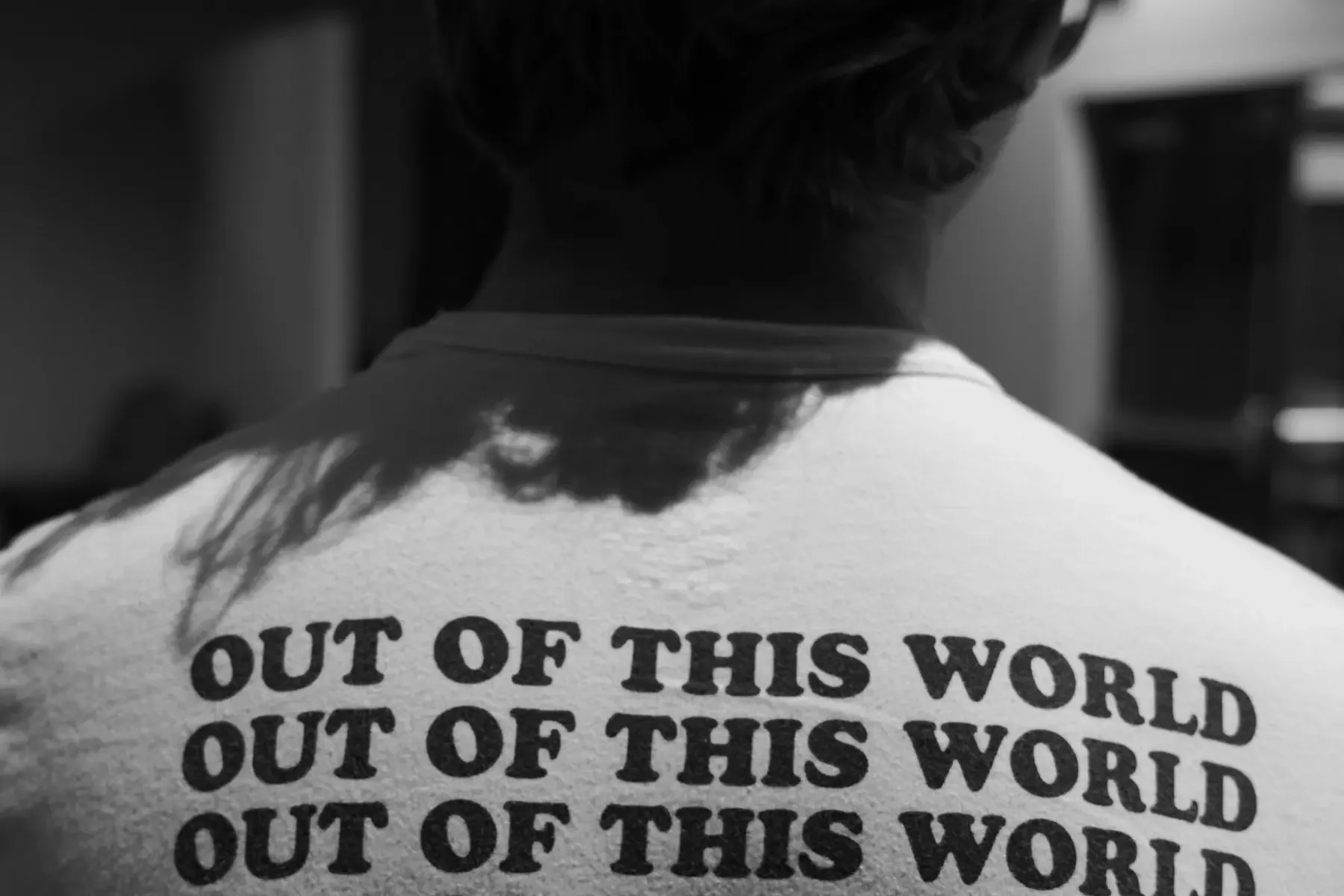
Image credits: Elijah Garza | Unsplash
And here’s the question I really want leaders to ask:
What would you redesign if one of your seemingly unlimited inputs suddenly became scarce?
Your company doesn’t need to go to Mars to find out. But it might be worth thinking like you do.
Since I’m still collecting t-shirt slogans: what belongs on yours?
About Tiffany

Dr. Tiffany Vora speaks, writes, and advises on how to harness technology to build the best possible future(s). She is an expert in biotech, health, & innovation.
For a full list of topics and collaboration opportunities, visit Tiffany’s Work Together webpage.
Get bio-inspiration and future-focused insights straight to your inbox by subscribing to her newsletter, Be Voracious. And be sure to follow Tiffany on LinkedIn, Instagram, Youtube, and X for conversations on building a better future.
For the Curious and the Voracious
Subscribe to Be Voracious, Tiffany’s newsletter, for thoughtful conversations on science, innovation, and leadership, delivered straight to your inbox.

Buy Tiffany a Cup of Coffee | Image credits: Irene Kredenets via Unsplash.
Donate = Impact
If this article sparked curiosity, inspired reflection, or made you smile, consider buying Tiffany a cup of coffee!
Your support will:
Spread your positive impact around the world
Empower Tiffany to protect time for impact-focused projects
Support her travel for pro bono events with students & nonprofits
Purchase carbon offsets for her travel
Create a legacy of sustainability with like-minded changemakers!
Join Tiffany on her mission by contributing through her Buy Me a Coffee page.
Our Editorial Process
We believe AI is most valuable when it strengthens human thinking rather than replaces it. Throughout our editorial workflow, we use AI to transcribe conversations, organize information, brainstorm, challenge assumptions, improve clarity, automate repetitive tasks, and pressure-test our reasoning before publishing.
Editorial responsibility remains ours. AI helps us think, write, and work more effectively, but judgment, accountability, and our relationship with readers remain human.