Image credits: Marco | Adobe Stock
At the 2026 Humans to the Moon and Mars Summit in Houston, I was excited to host Explore Mars’ first Mars Innovation Workshop focused on food and nutrition. We called the workshop “Feeding the Future” because we weren’t just interested in food challenges on Mars. We wanted to identify tough challenges that would benefit Earth in the short term as well as Mars in the long term.
Focusing on Problems Instead of Jumping to Solutions
As with our first Mars Innovation Workshop, I tasked our participants with a mindset that’s easy to say but tough to inhabit: focusing on problems and not jumping to solutions. What are the hardest food-related jobs we still can’t reliably do if humans are going to live on Mars? Not “what technology should we fund” or “what’s the coolest new thing out there and hey, can it work in space?” Just a ruthless focus on defining the actual problems.
A few dozen of us dug into these problems for a full day, with participants coming from national space agencies, private space companies, academia, the food sector, and more. We zoomed in on important Jobs To Be Done, did a fair bit of world-building to help us try to inhabit a future on the Red Planet, and even looked to AI to assist us in rapidly telling human stories (in comic-strip format) that could arise from solving these challenges for real … not just getting a “good enough” fix and then relying on Earth’s abundance to make up the shortfall.
This is what our whiteboard looked like at the end of our Jobs To Be Done brainstorm. On the left we kept track of Martian constraints. The rest of the board tallies our JTBDs. See a challenge you’re excited to tackle?
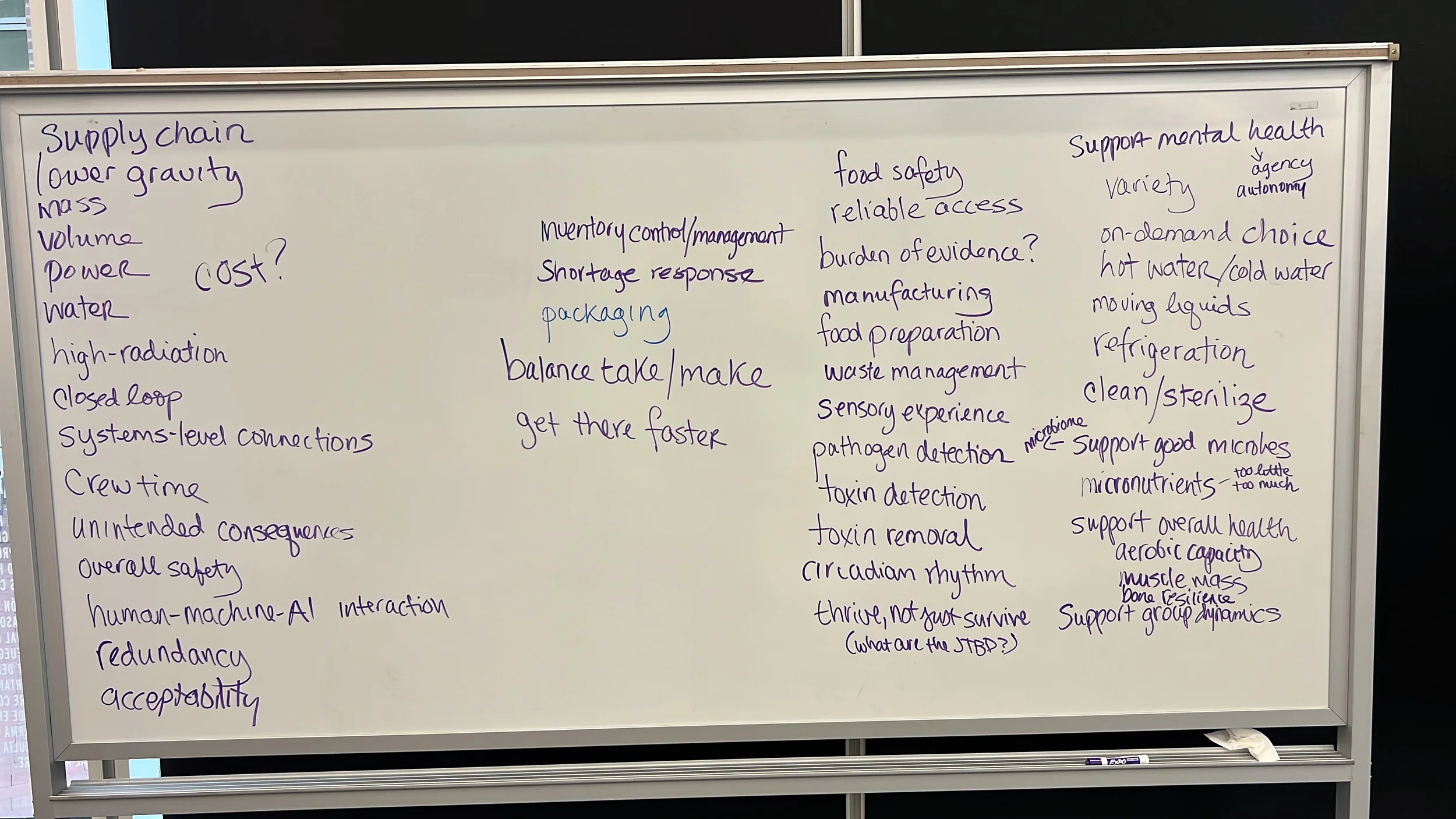
A snapshot of the Feeding the Future workshop's collective thinking, from supply chain and food safety to sensory experience and circadian rhythm.
Sidebar: I particularly enjoyed two late-breaking JTBDs: “go faster” and “eat less”. The first addresses both the transit phase to Mars and resupply (nuclear propulsion, anyone?). The second sort of gets at the whole thing, I guess. Should everyone in space be taking GLP-1 drugs? The idea came up, at least tangentially, in this recent analysis of which drugs should be targeted for off-Earth manufacturing.
Six Feeding the Future Takeaways Worth Sharing
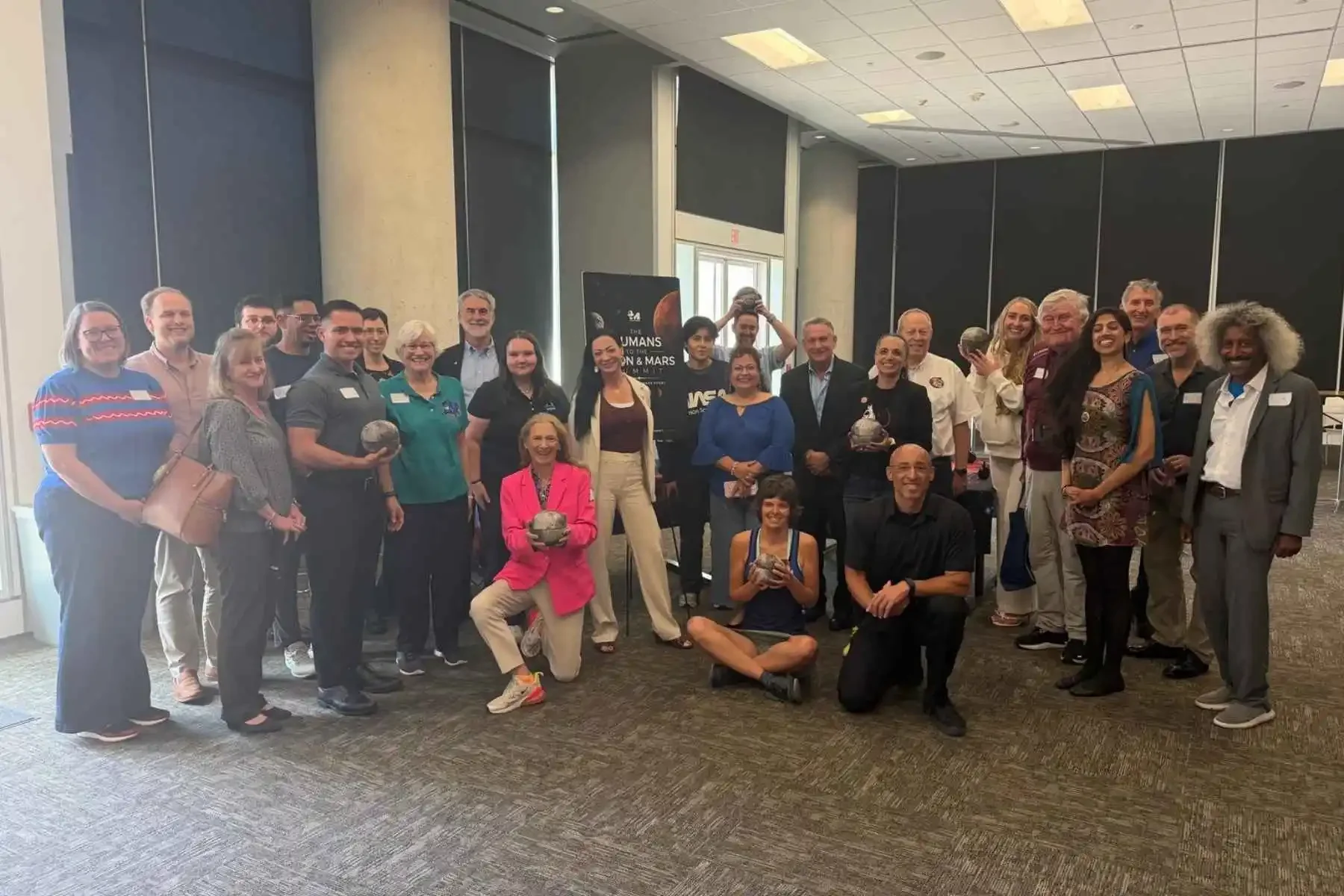
The Feeding the Future workshop participants, representing space agencies, private companies, academia, and the food sector.
Here are six things from the workshop that I’m still mulling over:
1. The basics are still hard off Earth.
Like: Hot water, cold water, refrigeration, cleaning, sterilization, moving liquids, inventory management, and much, much more. Yes, these are ordinary capabilities on Earth. However, off Earth, under severe constraints on mass, volume, power, water, crew time, and resupply, they become huge challenges. Solve one well, and you may unlock a whole family of other possibilities in space and on Earth.
2. Food safety changes completely when you start producing food away from Earth.
Prepackaged food can be tested before launch. Freshly grown or manufactured food cannot rely on that model. How do you know—in real time—that food is safe before someone eats it? How do you clean and sanitize without huge amounts of water or chemicals? Those sound like narrow questions, but they aren’t. They expose how fortunate we are to be able to rely on decades of work that have made most of our food systems astonishingly safe (all things considered, even given the headlines this summer).
3. A food system has to nourish humans, not just deliver nutrients.
Again and again, we came back to variety, sensory experience, autonomy, cultural identity, shared meals, and mental health. One tension I especially liked: the importance of reducing crew workload. But preparing and sharing food can itself be a meaningful human activity. Sometimes “more efficient” can accidentally remove something valuable … for some folks, anyway.
4. Duration changes the problem.
What works for days or months (say, on a space station) may fail over years (for Mars and beyond). Plus, once we stop imagining highly selected adult astronauts and start imagining children, families, aging populations, and multigenerational communities, the questions get much bigger. At some point, the goal has to shift from surviving to thriving. Hopefully sooner rather than later, but maybe not, given current constraints. (Hence, the innovation challenge!)
5. Mars problems are Earth problems, too.
Consider issues like efficient refrigeration, rapid food-safety testing, circular packaging, resilient food access, and better management of scarce resources. Those should all sound familiar to you, because we’re facing them all on Earth, today and in the coming decades (particularly thanks to climate stresses). Yes, Mars pushes these problems to extremes. However, solving them could deliver amazing value in hospitals, remote communities, disaster response, agriculture, food deserts, and private homes here on Earth.
6. The most interesting question may be: what unlocks everything else?
We weren’t trying to list every challenge, although we certainly came up with a long list! Rather, we were looking for the breakthrough challenges: the Jobs To Be Done that, once solved, make many other things possible. That is a very powerful way to think about innovation because it prompts us to ask questions like:
What can’t we know? (Yet? Ever?)
What can’t we do? (Yet? Ever?)
What can’t we recover from? (Now? Ever?)
What can’t we live with?
What can’t we live without?
What Does a Food System Need to Help People Thrive on Mars?
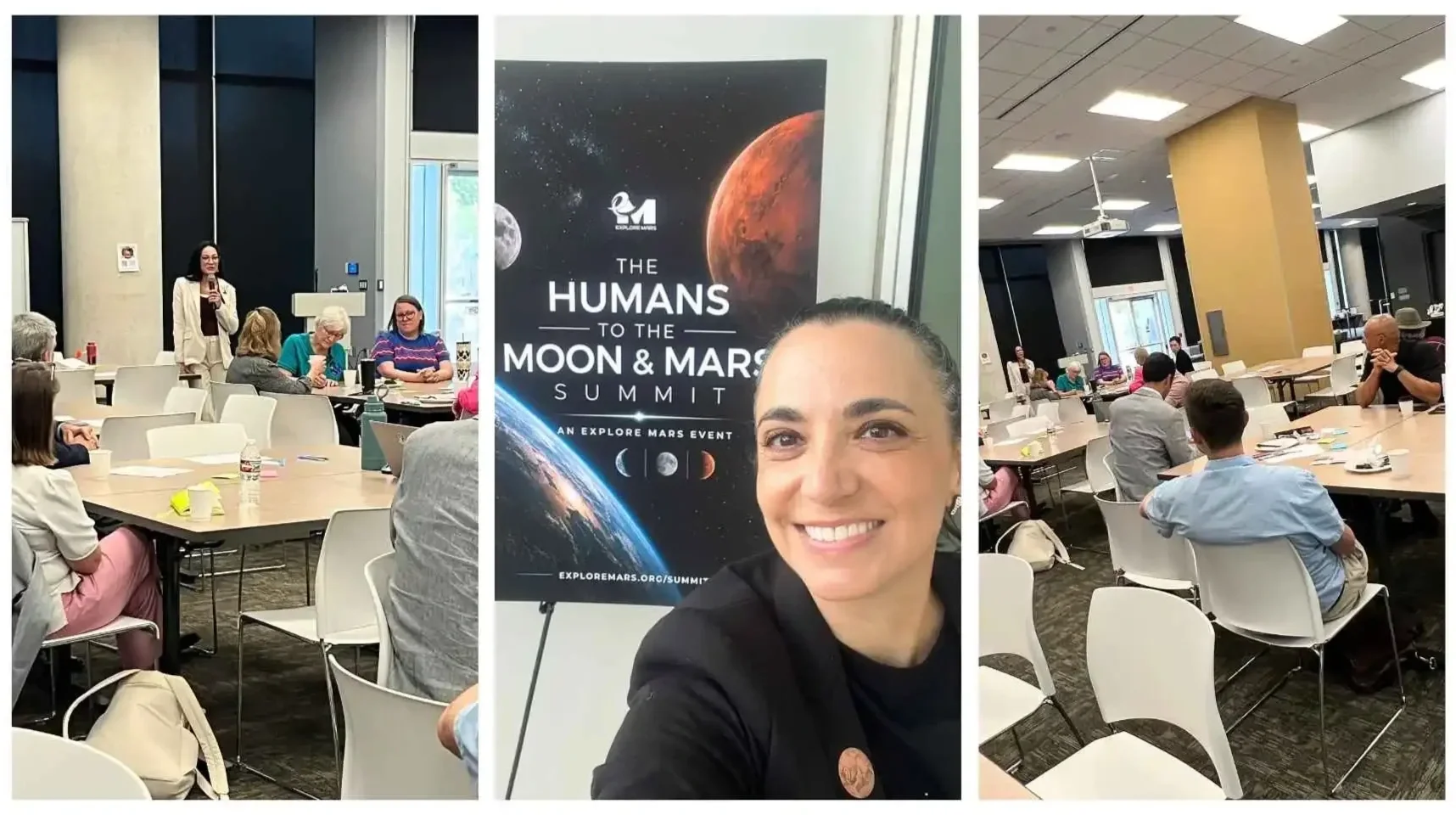
Scenes from the H2M2 Summit Feeding the Future workshop: participants from space agencies, private companies, academia, and the food sector working through tough questions together.
Overall, this workshop left me with what’s perhaps the biggest question of all:
If Mars is going to become a home rather than a destination, what does its food system need to do for people that today’s systems on Earth don’t even attempt?
Sounds to me like a question ripe for delivering value across decades, wherever people call home.
More to come from this work!
Note: This workshop operated under the Chatham House Rule. Ideas and insights are therefore shared here without attribution.
If this conversation sparked your curiosity, you might want to explore these additional resources:
💡Why I Talk About Chocolate (And What It Has to Do with the Future) | Read my reflection piece here
💡How Biotechnology is Spicing Up the Future of Food | Read my reflection piece here
💡What I Think About Plant-Based Protein Substitutes and The Future of Food | Read my reflection piece here
💡Space Food Gets a Biotech Upgrade | Watch the Exponential Africa podcast clip here
💡Chocolate Truffles on a Moon Mission | Watch the Exponential Africa podcast clip here
💡Mars Analog Missions, Food, and Human Connection | Watch the Humanity in Deep Space webinar clip here
About Tiffany

Dr. Tiffany Vora speaks, writes, and advises on how to harness technology to build the best possible future(s). She is an expert in biotech, health, & innovation.
For a full list of topics and collaboration opportunities, visit Tiffany’s Work Together webpage.
Get bio-inspiration and future-focused insights straight to your inbox by subscribing to her newsletter, Be Voracious. And be sure to follow Tiffany on LinkedIn, Instagram, Youtube, and X for conversations on building a better future.
For the Curious and the Voracious
Subscribe to Be Voracious, Tiffany’s newsletter, for thoughtful conversations on science, innovation, and leadership, delivered straight to your inbox.

Buy Tiffany a Cup of Coffee | Image credits: Irene Kredenets via Unsplash.
Donate = Impact
If this article sparked curiosity, inspired reflection, or made you smile, consider buying Tiffany a cup of coffee!
Your support will:
Spread your positive impact around the world
Empower Tiffany to protect time for impact-focused projects
Support her travel for pro bono events with students & nonprofits
Purchase carbon offsets for her travel
Create a legacy of sustainability with like-minded changemakers!
Join Tiffany on her mission by contributing through her Buy Me a Coffee page.
Our Editorial Process
We believe AI is most valuable when it strengthens human thinking rather than replaces it. Throughout our editorial workflow, we use AI to transcribe conversations, organize information, brainstorm, challenge assumptions, improve clarity, automate repetitive tasks, and pressure-test our reasoning before publishing.
Editorial responsibility remains ours. AI helps us think, write, and work more effectively, but judgment, accountability, and our relationship with readers remain human.