How Safe Is Safe Enough to Go to Mars?
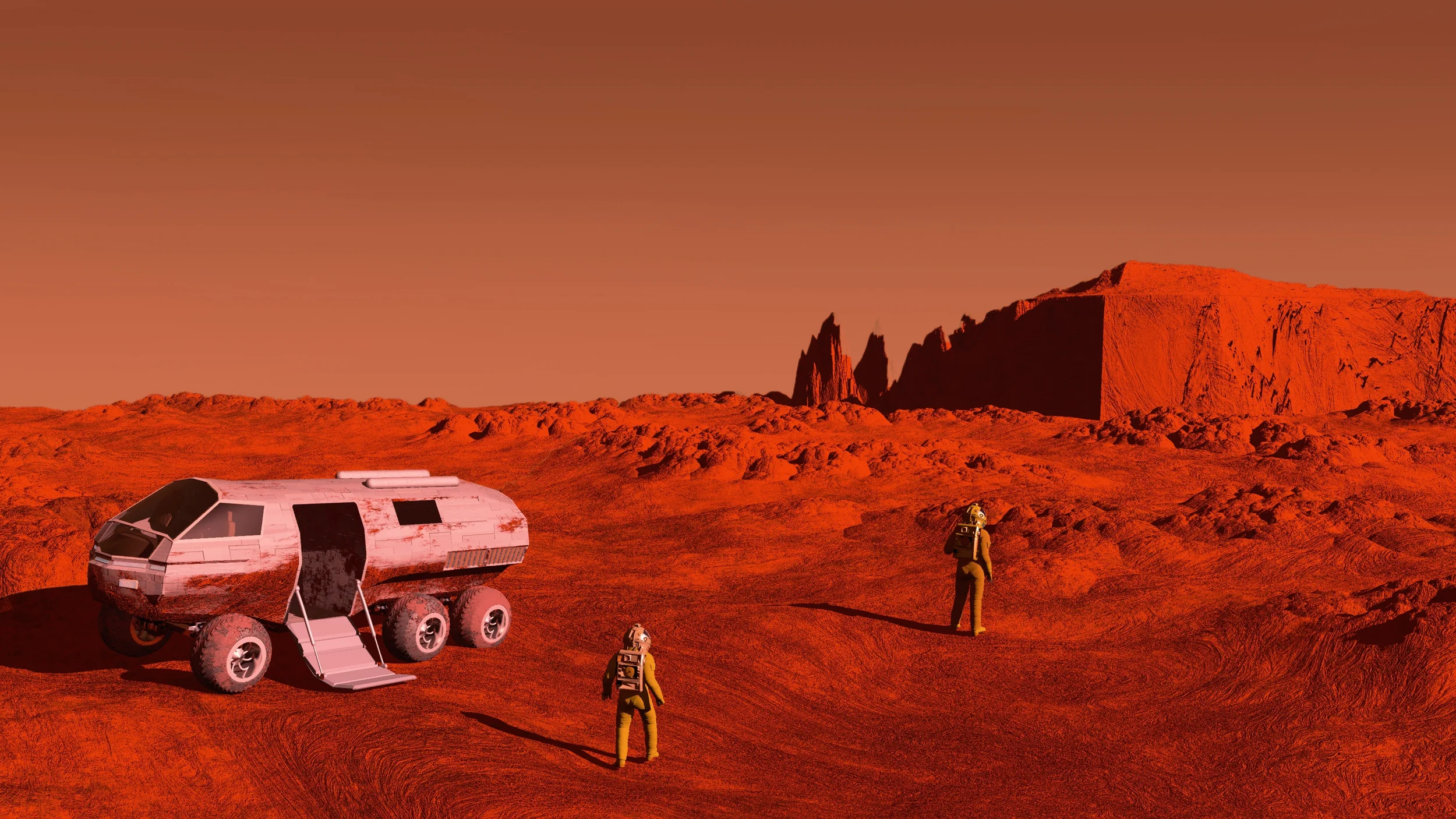
Image credits: Sergey Drozdov | Adobe Stock
We often talk about going to Mars as though the biggest question is whether we can do it. Here’s a harder, more uncomfortable version of that question: When will we decide that we know enough to try?
I had the chance to explore that question in July when I opened the Humans to the Moon and Mars Summit with two people who know quite a bit about accepting risk in the name of exploration: retired NASA astronauts Dr. Bonnie Dunbar and Tony Antonelli. (You can watch the whole video here.)
Here’s a bit of context for the following conversation. Bonnie, a Professor of Aerospace Engineering at Texas A&M University, flew on five Space Shuttle Missions, including two that docked with the Mir space station. Tony served as a Naval Aviator before piloting two Space Shuttle missions to the International Space Station.
Our conversation, hosted by the nonprofit Explore Mars, was meant to frame our current Moon to Mars journey. Why are we returning beyond low Earth orbit now? What role does the Moon play on the path to Mars? What are we excited about—and what could derail us?
What Astronaut Insights Reveal About Unanswered Space Hazards
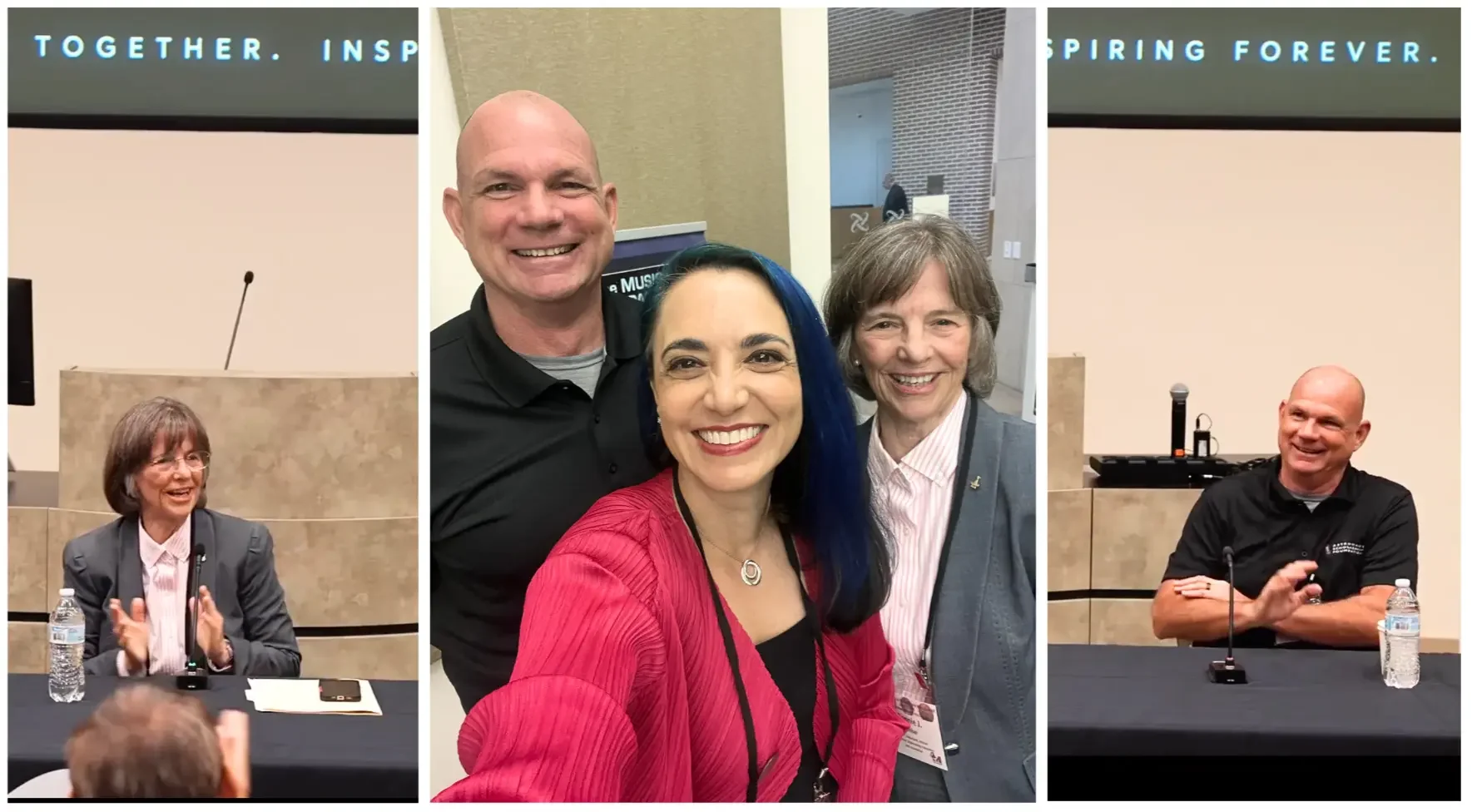
Dr. Tiffany Vora with retired NASA astronauts Dr. Bonnie Dunbar and Tony Antonelli at the 2026 Humans to the Moon and Mars Summit.
It didn't take long before I steered us toward the unanswered questions that these astronauts have about our capability to get to Mars safely, stay there, and come back safely. After some great insights from Bonnie about the biomedical risks to humans, Tony asked a question that changed the conversation.
“What real risk is tolerable for a human shot at going to Mars?”
Is a one-in-a-thousand chance of losing the mission acceptable? One in a hundred? Where the crew doesn’t land but they make it home. Or consider the worst case scenario in which the crew doesn’t survive; what risk is tolerable? Again, one in a thousand? One in a hundred? What about a mission in which the odds of coming home are only fifty-fifty?
Bonnie kept bringing us back to everything we still need to understand before we send people on a journey from which there is no quick return. Consider the systems that will keep those humans alive. We have decades of experience with environmental control and life-support systems in low Earth orbit, and those systems still fail. On an orbiting space station, we can troubleshoot, replace hardware, send failed components back to Earth, and learn from what went wrong.
Mars doesn't give us that luxury. Six months into the journey, you don't simply turn around. “Orbital mechanics is going to take you out” is how Bonnie puts it to her students.
The Moon as a Laboratory for Reducing Risk
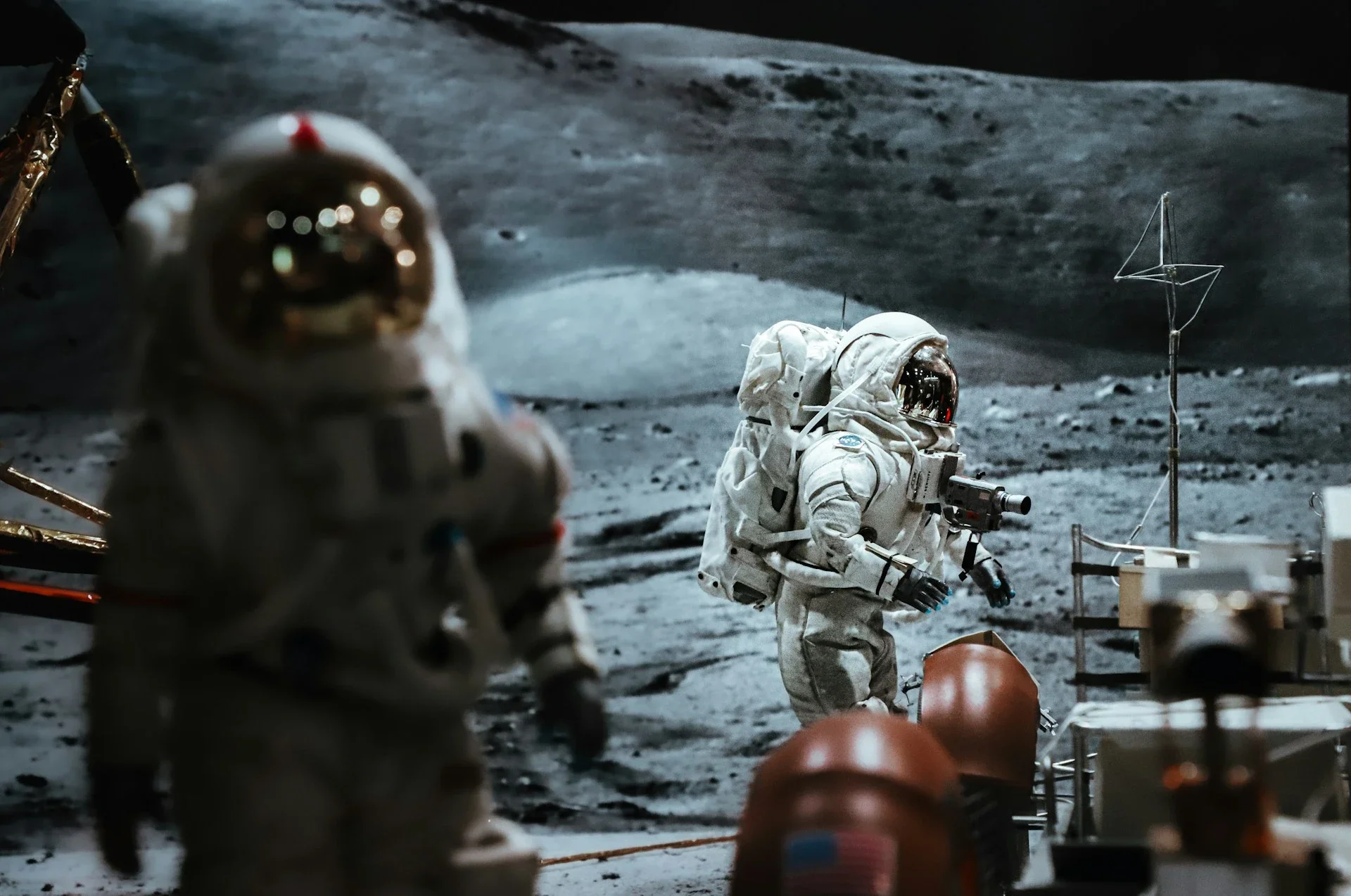
Image credits: Mario Verduzco | Unsplash
And then there are the unknown unknowns.
Bonnie described reduced-gravity fluid experiments that have produced genuinely surprising results. Humans, spacecraft, life-support systems, heat transfer, fluid flow all behave differently as gravity changes. We have extensive experience at one g and in microgravity. Mars is about three-eighths of Earth's gravity. The Moon, at one-sixth, gives us another crucial place to learn.
This is one reason I tend to find the familiar description of the Moon as a “stepping stone” to Mars inadequate. The Moon isn't simply somewhere we stop on the way to somewhere more interesting. It is an extreme environment where we can learn how humans and our technologies perform beyond low Earth orbit while we are still days, rather than months, from home. For Bonnie, that means using the Moon to “buy down” risk before we commit a crew to a multi-year Mars mission.
Learning Before We Go, and Learning by Going
Tony kept pushing on the other side of the equation. At one point, he said, “I’d argue nothing’s going to burn down the unknowns like going.”
Because “How safe is safe enough?” initially sounds like an engineering question. We can characterize hazards, test hardware, model failure modes, gather biological data, improve reliability, and steadily shrink the territory of the unknown. But engineering alone cannot tell us how much residual risk is acceptable.
That's a value judgment.
What is exploration worth? What is new knowledge worth? What risks can we ethically ask explorers to accept … and what risks should they be allowed to choose for themselves? Who gets to make that decision? Does our answer change when the mission is governmental rather than commercial? [I previously dug into some of these questions with Dr. Kelly Weinersmith, author of A City on Mars, on the Entanglements podcast from Undark Magazine (listen here). I also sat down with Kelly for a live interview at the 2024 Humans to Mars Summit, which you can view here.]
Our answers have very practical consequences. As Tony pointed out, a Mars mission designed around a one-in-a-thousand acceptable probability of losing the crew looks very different from one designed around one in a hundred. The spacecraft changes. The budget changes. The schedule changes. At some threshold, perhaps whether we go at all changes. But at this moment, we don’t have a spacecraft, a budget, or a schedule. Does that mean that any risk is formally acceptable right now?
Unfortunately, history doesn't give us a simple answer. Bonnie recalled Apollo astronaut John Young describing the startlingly low odds of success he had been given based on what was known at the time. Yet Apollo wasn't some giant leap of faith. Before Apollo 11 landed, NASA flew mission after mission to test systems, understand human physiology, learn how to operate beyond Earth, and reduce risk.
They learned before they went—and they learned by going.
That may be one of the defining tensions of the Artemis era.
Early in our conversation, Bonnie described today’s moment not as the beginning of a new era of human exploration, but as the “third start.” She grew up during the first great burst of American space exploration, when Wernher von Braun was already imagining a trajectory from the Moon toward Mars. That vision contracted after Apollo. Decades later came another push toward sustained lunar exploration and eventually Mars with Constellation. That program ended, too.
Now we have Artemis.
From inside the space community, it's easy to talk as though humanity's expansion beyond Earth is inevitable. Bonnie reminded us that it isn't. Momentum disappears. Programs disappear. Political priorities change. For better or for worse, generations move on.
Which means that getting humans to Mars is not simply a problem of propulsion, radiation, life support, or orbital mechanics. We also have to sustain the curiosity, political will, investment, patience, and tolerance for uncertainty required to keep attempting something whose outcome no one can guarantee.
Tony ended our conversation with a challenge that took us beyond Mars. Every generation, he suggested, should demonstrate that it can tackle something genuinely hard—something it doesn't yet know how to do. Not because success is guaranteed, but because the people who come after us should be able to look back and see that “We didn’t know what to do, but we didn't just do nothing.”
Wow.
What Mars Can Teach Us About Taking Risks on Earth
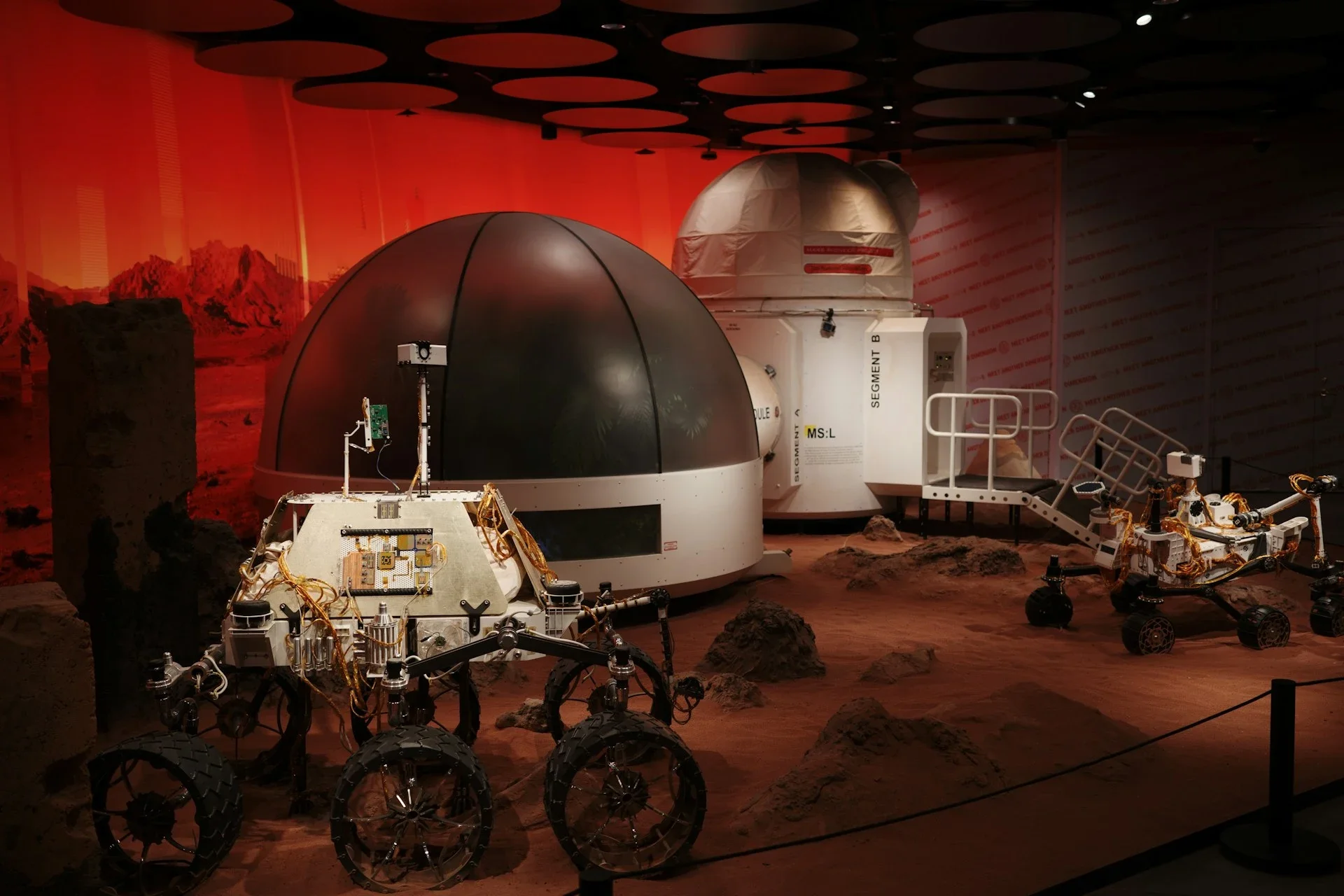
Image credits: XF |Unsplash
Most people will never go to Mars.* But all of us live in a world full of problems whose solutions we don't yet know. Cancer. Climate change. Food security. Geopolitical turbulence. And, yes, learning how to live and thrive both sustainably and resiliently.
Science helps us turn unknowns into questions we can investigate. Engineering turns some of those answers into capabilities. Neither can promise us a future without uncertainty. In fact, no one can make you that promise. Ever.
Eventually, though, we have to decide whether we know enough to act. And have a plan for what to do if it turns out we’re wrong.
Perhaps that's one reason Mars should matter even to people who don't consider themselves “space people.” It forces us to confront a question that reaches far beyond exploration:
Can we learn enough to act wisely, without demanding that we know everything before we are brave enough to begin?
I hope so.
Because we sure have some hard things to do.
I am deeply grateful to Dr. Bonnie Dunbar and Tony Antonelli, retired NASA astronauts, for their thoughtful, candid, and inspiring contributions to the 2026 Humans to the Moon and Mars Summit. Don’t forget to watch the whole video here - and I hope to see you at an Explore Mars event soon!
*This doesn’t apply to me, obviously. I’m going. Which is why we need to move this along, people.
If this conversation sparked your curiosity, you might want to explore these additional resources:
💡A Conversation with Kelly Weinersmith, Co-author of A City on Mars | Watch my interview with Kelly Weinersmith here
💡Can You Retire on Mars? | Read my reflection piece here
💡Book Recommendation: Becoming Martian by Dr. Scott Solomon | Read my book review here
💡When Science (Fiction) Is Human: Reflections on Project Hail Mary | Read the movie review here
💡Earth Lessons from Mars Exploration | Watch the Exponential Africa podcast clip here
💡So… Why Space? | Watch the H2M2 video clip here
💡What Will Life on Mars Look Like? | Watch the H2M2 video clip here
About Tiffany

Dr. Tiffany Vora speaks, writes, and advises on how to harness technology to build the best possible future(s). She is an expert in biotech, health, & innovation.
For a full list of topics and collaboration opportunities, visit Tiffany’s Work Together webpage.
Get bio-inspiration and future-focused insights straight to your inbox by subscribing to her newsletter, Be Voracious. And be sure to follow Tiffany on LinkedIn, Instagram, Youtube, and X for conversations on building a better future.
For the Curious and the Voracious
Subscribe to Be Voracious, Tiffany’s newsletter, for thoughtful conversations on science, innovation, and leadership, delivered straight to your inbox.

Buy Tiffany a Cup of Coffee | Image credits: Irene Kredenets via Unsplash.
Donate = Impact
If this article sparked curiosity, inspired reflection, or made you smile, consider buying Tiffany a cup of coffee!
Your support will:
Spread your positive impact around the world
Empower Tiffany to protect time for impact-focused projects
Support her travel for pro bono events with students & nonprofits
Purchase carbon offsets for her travel
Create a legacy of sustainability with like-minded changemakers!
Join Tiffany on her mission by contributing through her Buy Me a Coffee page.
Our Editorial Process
We believe AI is most valuable when it strengthens human thinking rather than replaces it. Throughout our editorial workflow, we use AI to transcribe conversations, organize information, brainstorm, challenge assumptions, improve clarity, automate repetitive tasks, and pressure-test our reasoning before publishing.
Editorial responsibility remains ours. AI helps us think, write, and work more effectively, but judgment, accountability, and our relationship with readers remain human.