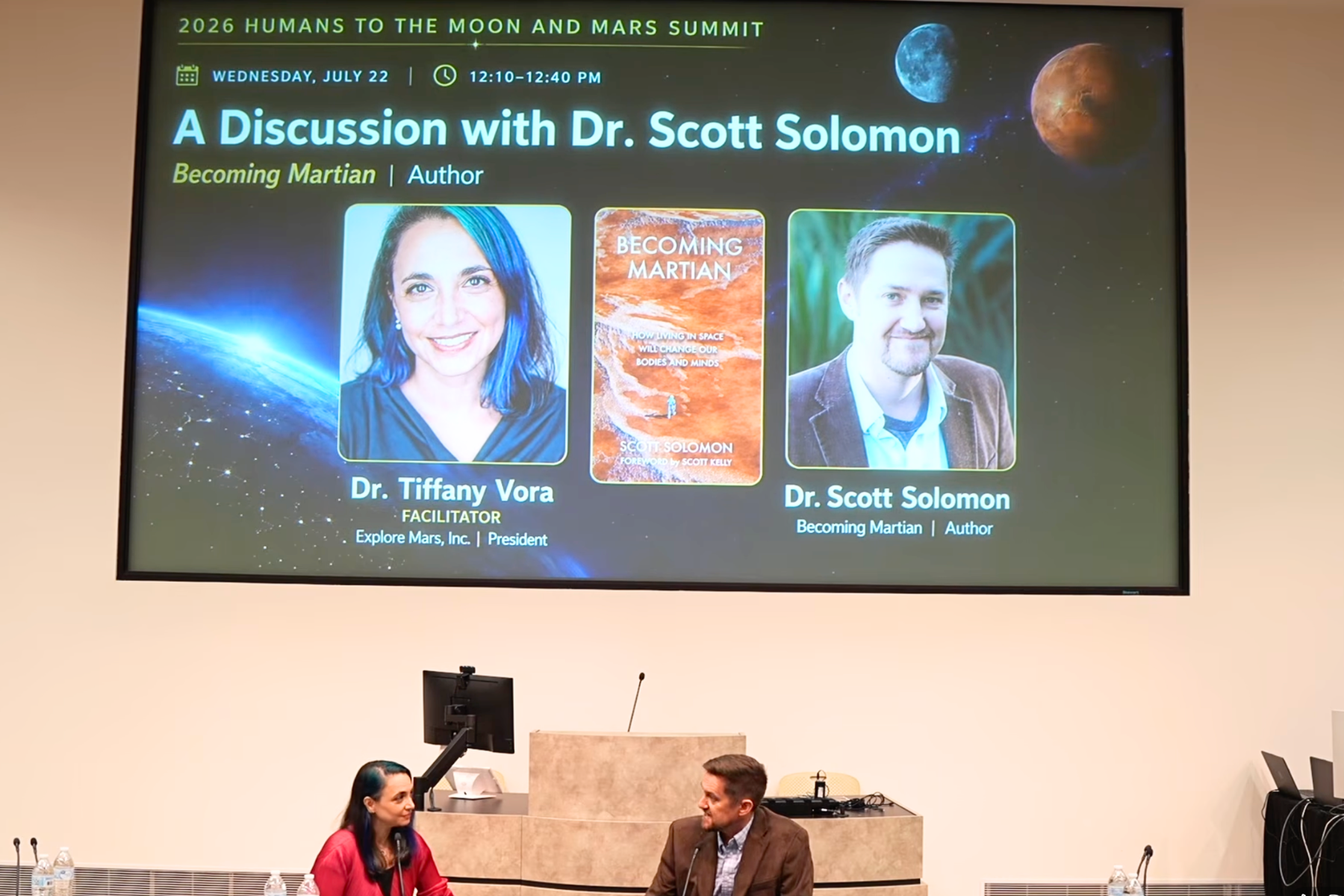
Dr. Tiffany Vora and Dr. Scott Solomon discuss Becoming Martian and what Mars could mean for human evolution at the 2026 Humans to the Moon and Mars Summit.
When we talk about sending humans to Mars, we tend to talk about rockets, habitats, radiation, food, and keeping people alive.
What happens after we stay for a while?
At the 2026 Humans to the Moon and Mars Summit, hosted by Explore Mars, I sat down with evolutionary biologist Dr. Scott Solomon to talk about his terrific new book, Becoming Martian: How Living in Space Will Change Our Bodies and Our Minds. You can watch the whole video here.
A technical note: we had an audio failure during the interview, so several minutes of our conversation vanished into the void. 🚀 If you notice an abrupt jump in the recording, that's why.
What Happens When Humans Are Born on Mars?
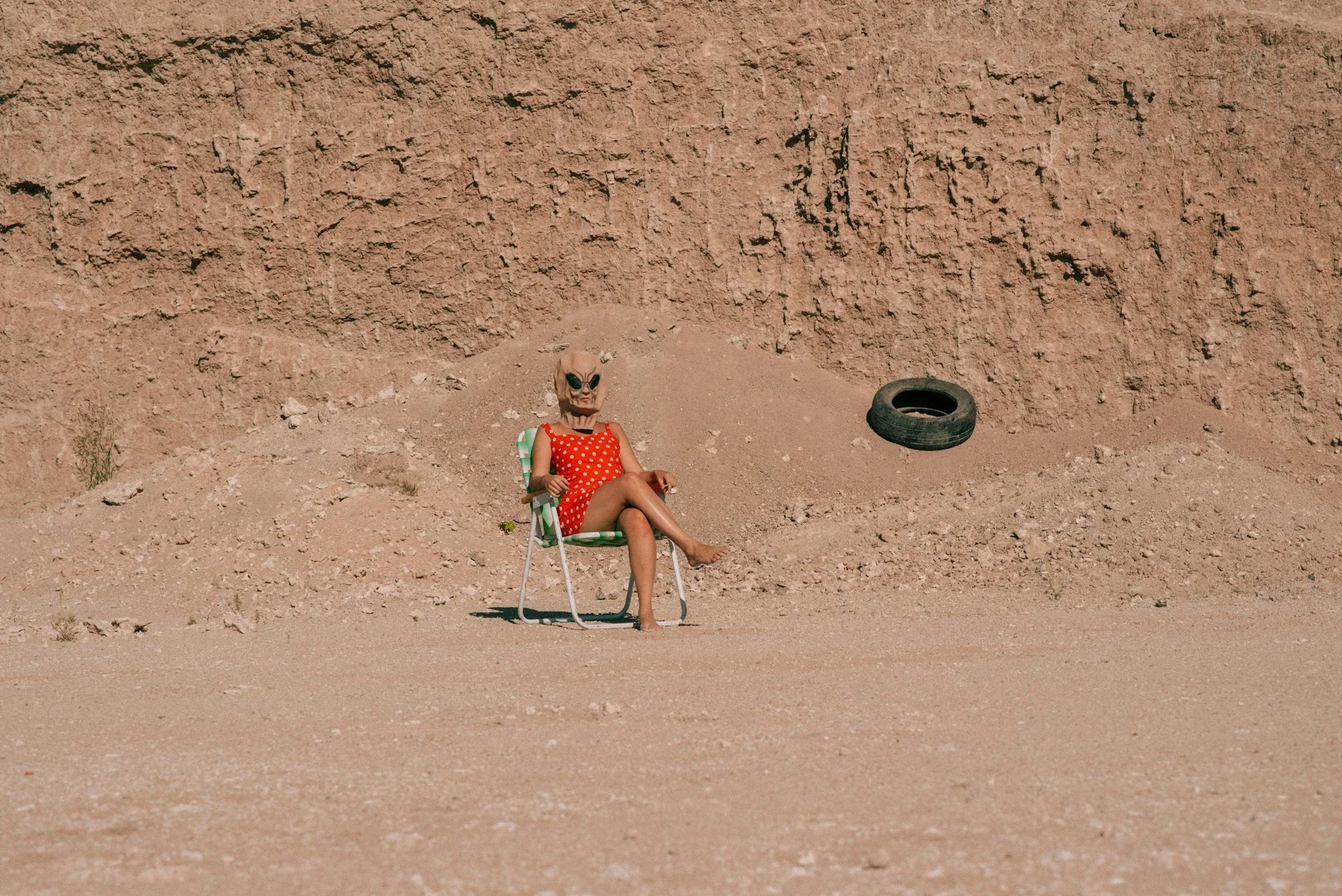
Image credits: Luli Sosa Benintende |Unsplash
During our conversation, things got weird pretty quickly … in the best possible way, of course.
What happens when children are conceived, born, and raised in 3/8 gravity? What happens to their bones, cardiovascular systems, immune systems, and microbiomes? Could someone born on Mars even come "home" to Earth?
Let’s not forget about evolution.
As Scott memorably reminded us, forget "survival of the fittest": evolution is all about babies. If humans live and reproduce on Mars for generations, then natural selection begins operating under conditions our species has never experienced on Earth. You know the context: lower gravity, higher radiation, different daily and annual rhythms, a radically different microbial environment … the list goes on and on.
Scott pointed out that even the phrase natural selection can function as a kind of euphemism. Evolution isn’t a gentle optimization algorithm. Selection involves suffering, reproductive failure, and death. If we eventually possess the tools to intentionally help humans adapt to Mars, do we have an obligation to use them?
Earth Itself Might Be the Alien Planet
Image credits: Chuttersnap |Unsplash
Which led me to another question I wanted to push on: how natural will that natural selection actually be?
If we can move gametes between planets, use IVF and gene editing, engineer our microbiomes, or otherwise intervene in our own biology, then becoming Martian may be partly something that happens to us—and partly something we choose. One of the strangest inversions in our conversation was this: for someone born and raised on Mars, Earth itself might be the alien planet. A child raised with a dramatically simplified microbial environment could find our biologically riotous world profoundly challenging (perhaps even lethal) to their immune system.
The Ethical Choices Behind Becoming Martian
Image credits: Leo_Visions | Unsplash
That leads to some enormous ethical questions. Do we engineer humans to thrive on Mars? What if doing so makes them less capable of living on Earth? If populations on different worlds eventually diverge enough to become different kinds of humans, is that something to fear, or is it simply another chapter in the extraordinary evolutionary history of our species? (If you’re looking for a sci-fi treatment of this question, check out Seveneves, by Neal Stephenson.)
Scott ends up positioning Mars as part of a much older human story: the people who set out across the Pacific in Polynesian voyaging canoes, carrying everything they needed to build lives on lands they had never seen. Sure, we’re talking about different “oceans” and different “spacecraft.” Nonetheless, Scott sees the same remarkable human impulse to venture into the unknown.
More regrettably, I somehow made it through the entire interview with Scott without asking him about his recent appearance in an article in Playboy magazine. Clearly, my interviewing skills were overcome by my nerdy passion for biology!
Who Might We Become If We Stay on Mars?
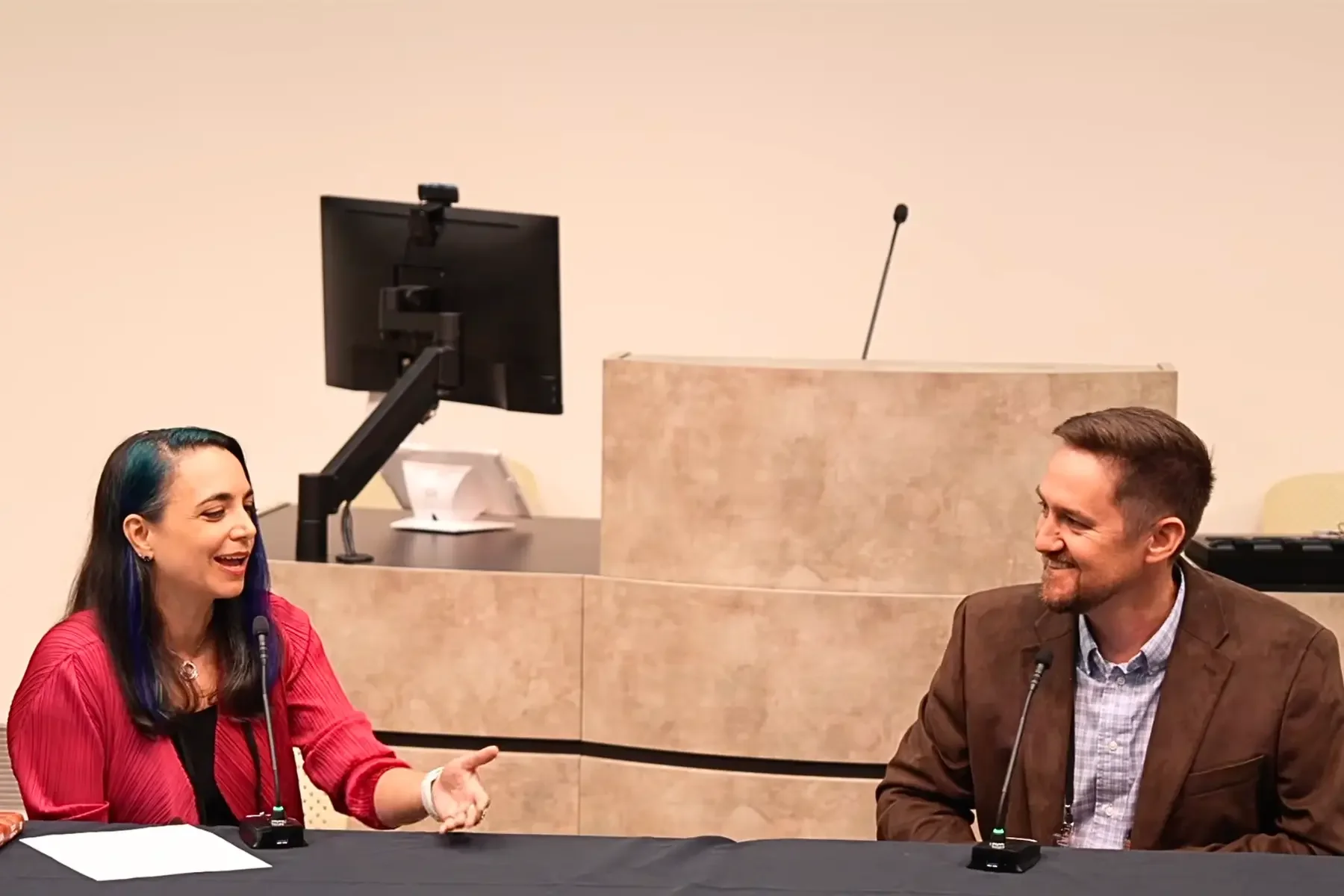
Dr. Tiffany Vora and Dr. Scott Solomon close out their conversation on evolution, ethics, and the human drive to explore.
Here’s where our conversation ended. Humans have done hard things before. We have crossed into the unknown before. Whatever biology—both natural and artificial—does to us along the way, perhaps one thing worth carrying from Earth is the stubborn human conviction that we’ll figure it out together.
Fortunately, you can learn much more from Scott himself in Becoming Martian. I recently reviewed the book, and I highly recommend it … especially if you think the interesting question about Mars isn't merely whether we can get there, but who we might become if we stay.
If this conversation sparked your curiosity, you might want to explore these additional resources:
💡Book Recommendation: Becoming Martian by Dr. Scott Solomon | Read my book review here
💡Can You Retire on Mars? | Read my reflection piece here
💡Feeding the Future: What Mars Can Teach Us About Food on Earth | Read my reflection piece here
💡When Science (Fiction) Is Human: Reflections on Project Hail Mary | Read the movie review here
💡Rethinking Manufacturing on Mars | Watch the Exponential Africa podcast clip here
💡What Will Life on Mars Look Like? | Watch the H2M2 video clip here
About Tiffany

Dr. Tiffany Vora speaks, writes, and advises on how to harness technology to build the best possible future(s). She is an expert in biotech, health, & innovation.
For a full list of topics and collaboration opportunities, visit Tiffany’s Work Together webpage.
Get bio-inspiration and future-focused insights straight to your inbox by subscribing to her newsletter, Be Voracious. And be sure to follow Tiffany on LinkedIn, Instagram, Youtube, and X for conversations on building a better future.
For the Curious and the Voracious
Subscribe to Be Voracious, Tiffany’s newsletter, for thoughtful conversations on science, innovation, and leadership, delivered straight to your inbox.

Buy Tiffany a Cup of Coffee | Image credits: Irene Kredenets via Unsplash.
Donate = Impact
If this article sparked curiosity, inspired reflection, or made you smile, consider buying Tiffany a cup of coffee!
Your support will:
Spread your positive impact around the world
Empower Tiffany to protect time for impact-focused projects
Support her travel for pro bono events with students & nonprofits
Purchase carbon offsets for her travel
Create a legacy of sustainability with like-minded changemakers!
Join Tiffany on her mission by contributing through her Buy Me a Coffee page.
Our Editorial Process
We believe AI is most valuable when it strengthens human thinking rather than replaces it. Throughout our editorial workflow, we use AI to transcribe conversations, organize information, brainstorm, challenge assumptions, improve clarity, automate repetitive tasks, and pressure-test our reasoning before publishing.
Editorial responsibility remains ours. AI helps us think, write, and work more effectively, but judgment, accountability, and our relationship with readers remain human.