When Ice Becomes Memory: Lessons from Extreme Environments for Climate, Governance, and Peace
Guest Blog
By Abeer S. Al-Saud

Drake Passage | Image credits: mrallen | Adobe Stock
The first iceberg did not appear as an object. It arrived as a presence.
We had just crossed the Drake Passage, a threshold where the body understands what the mind resists: that entering another system is never conceptual. It is physical.
And then, Antarctica.
I remember standing alone on the deck, the air sharper than anything I had known, the horizon almost dissolving into the sky. There was no movement, no noise, only something vast and suspended.
It was there, in that stillness, that I understood for the first time that silence has a sound. Not emptiness, but density. Not absence, but memory.
From Conflict Zones to the Cryosphere
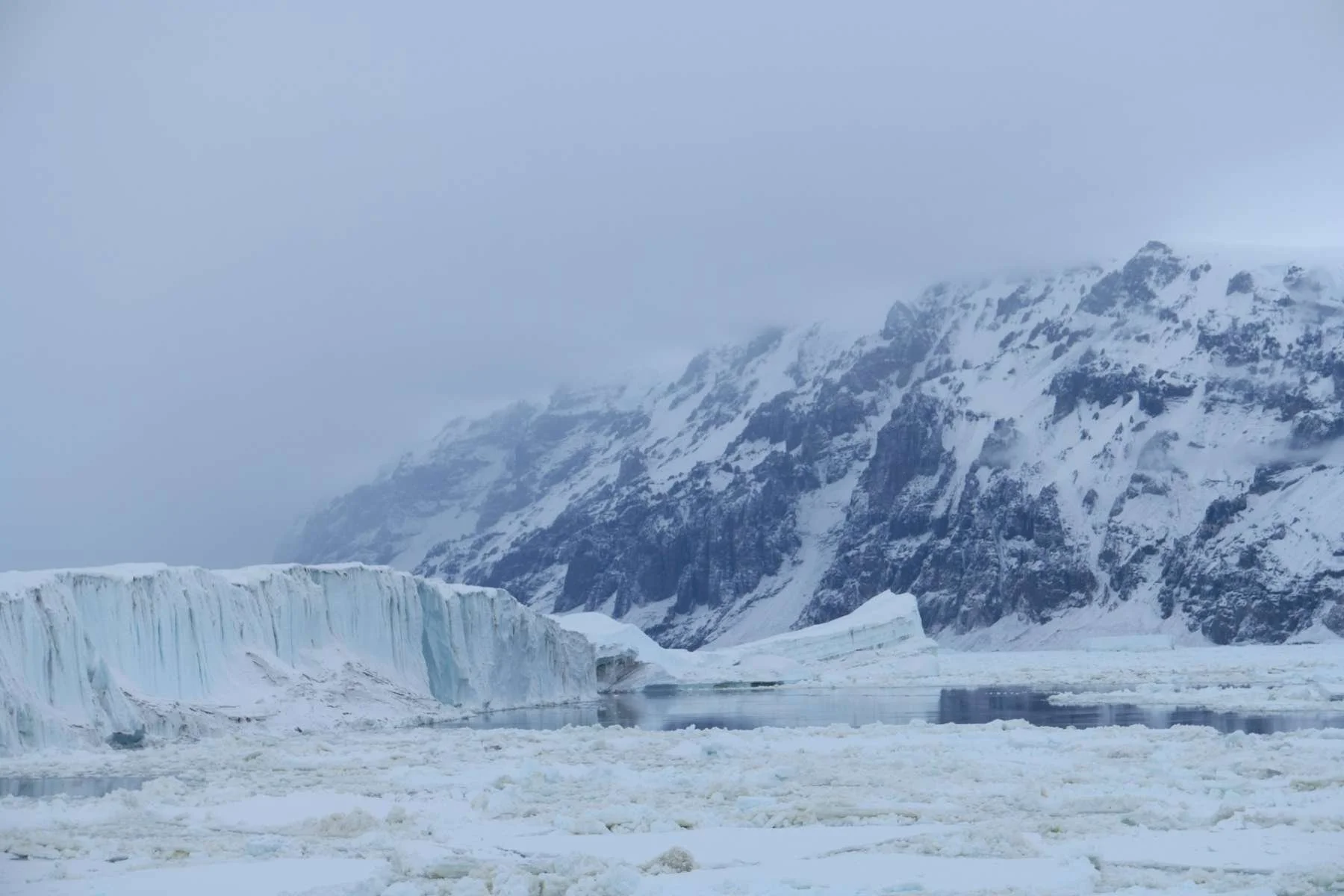
Ross Sea, Antarctica | Image credits: Una Miller | Unsplash
Until then, my work had unfolded across international development, multilateralism, and peacebuilding, often in fragile states and war-affected regions, where borders defined everything. Where responsibility ended. Where intervention began. Where survival depended on lines drawn and defended.
The themes remained.
It was the geography that changed.
From conflict zones, I found myself drawn toward extreme environments: the polar regions, the deep ocean, and outer space, through the work of the Timenschen Institute. Not as distant frontiers, but as the underlying systems that sustain life on Earth. Over time, I also turned toward creative industries as a parallel language, one capable of translating complexity into feeling, and feeling into action.
But Antarctica does not recognize lines. It dissolves them. And in doing so, it reveals something more demanding.
Relationship.
Currents of Consequence: Connecting the Pole to the Peninsula
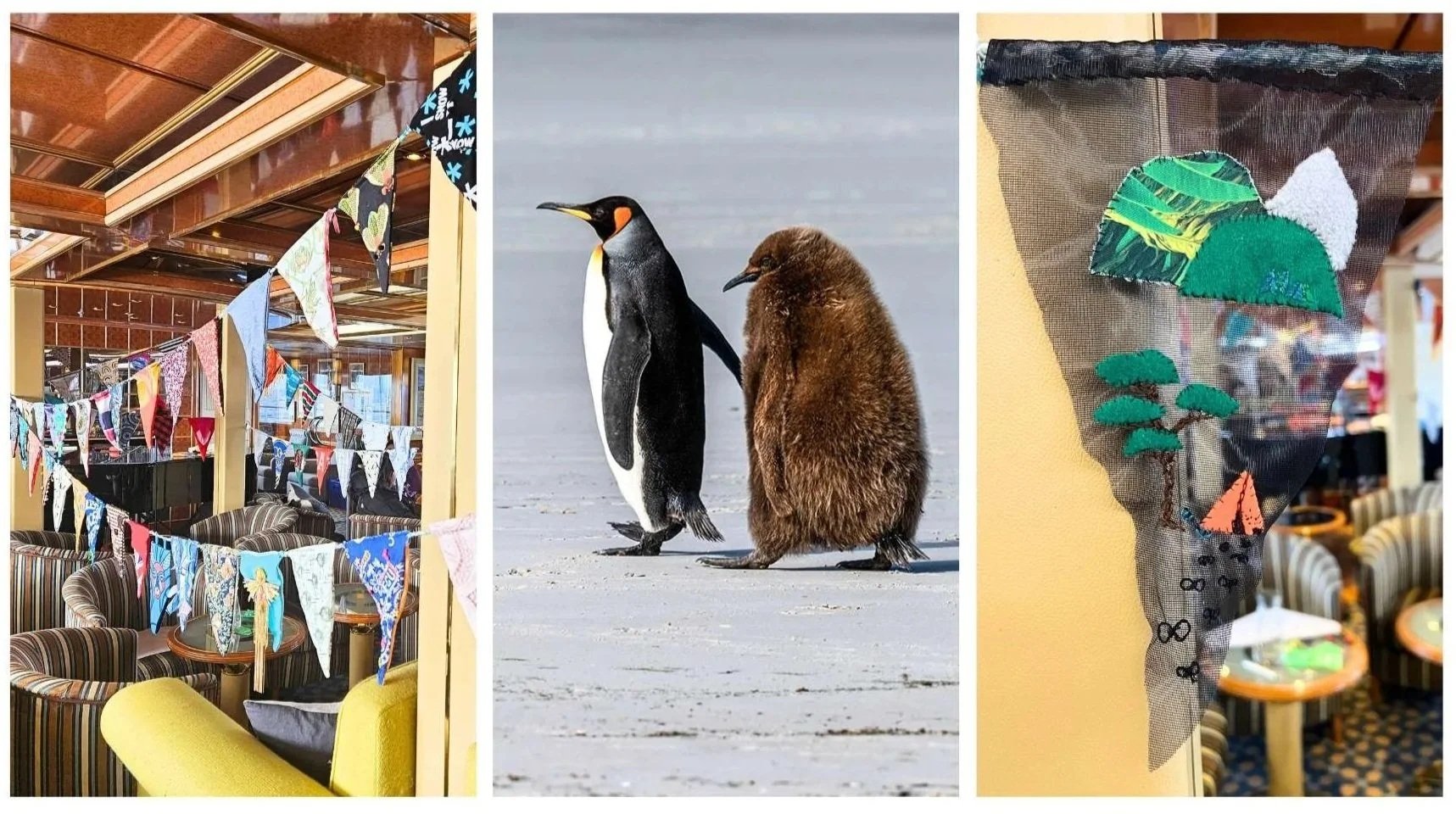
Photos of buntings and penguins from the Homeward Bound Antarctic voyage in 2023, joined by Abeer and Tiffany | Image credits: Heidi Victoria (left, center) and Tiffany Vora (right)
On that expedition, something else became visible.
People whose countries remain in conflict beyond that continent stood together on the same deck, speaking not of division, but of science, of ecosystems, of the future. Conversations shifted, quietly but unmistakably, toward what sustains life rather than what separates it. For a moment, the world reorganized itself. Not around borders, but around shared responsibility.
Among scientists, explorers, and observers, we also created something together: a vast nautical bunting, assembled collectively from fragments that carried different stories, different geographies. It stretched across the ship like a quiet artwork, an expression not of agreement, but of coexistence. A temporary constellation held together by intention.
The ice does not belong to itself. It holds time, atmosphere, pressure, histories layered beyond human scale. What melts here does not remain here. It travels into oceans, into economies, into lives far removed from this white horizon. The cryosphere is not a place. It is a system.
And slowly, almost imperceptibly, I began to understand that we are no longer living in a world defined by borders, but within systems we are only beginning to feel. Because the living systems of our planet are already interconnected.
Penguins belong to Antarctica. Polar bears to the Arctic. Snow leopards across the Himalayas, the third pole. Each is a precise expression of place. Each depends on conditions that extend far beyond national boundaries. There is, perhaps, a quiet poetry in the fact that World Penguin Day falls on January 20, a date that, for me, has always carried its own personal meaning.
And yet, geography itself resists the simplicity we often assign to it.
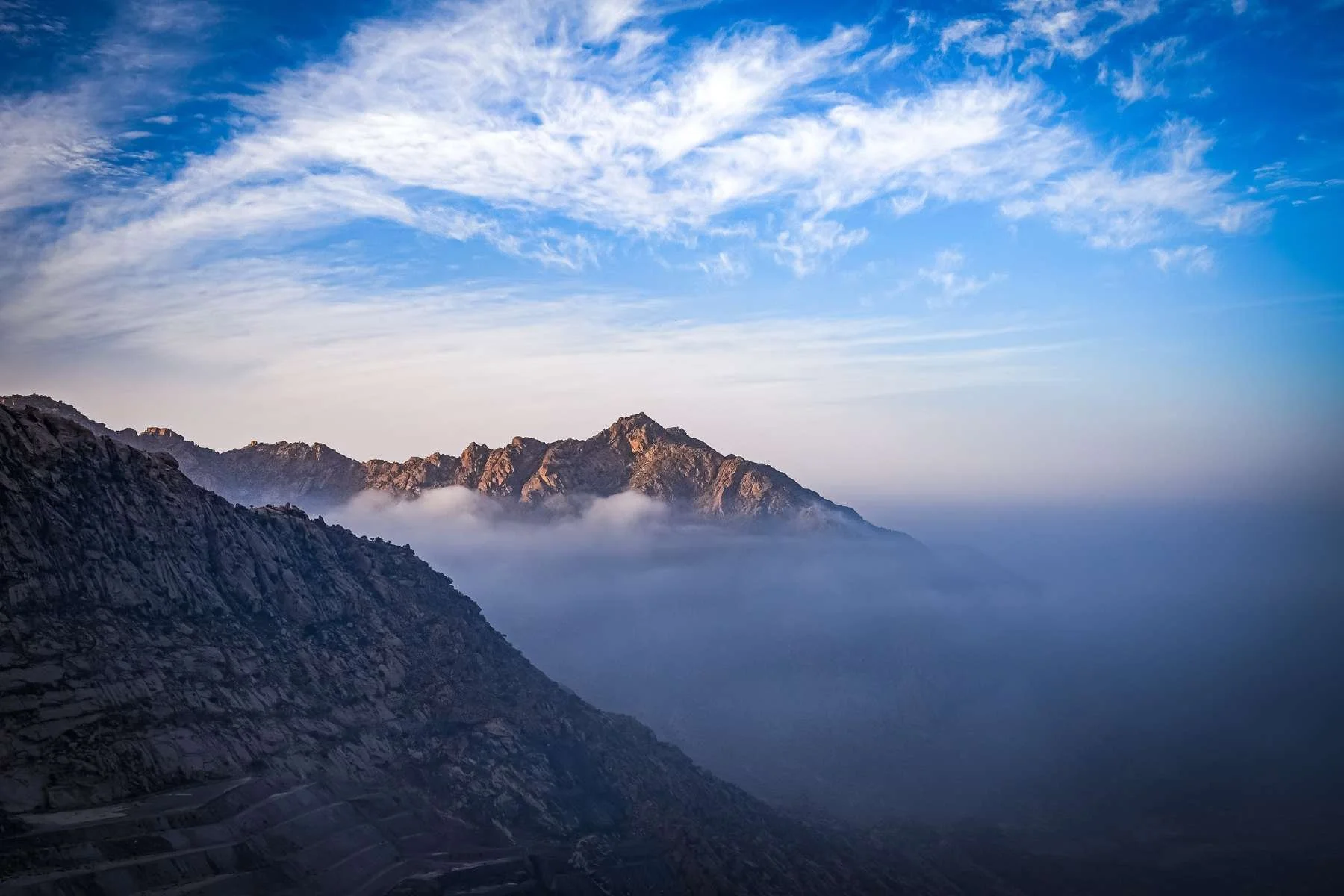
Image: Mountain landscape with clouds during winter season from Al HadaTaif near Makkah, Saudi Arabia | Image credits: Riyas |Adobe Stock
The Arabian Peninsula, so often imagined only through heat and desert, carries its own quiet contradictions. Snow falls in Saudi Arabia’s northern regions, and across parts of Jordan, an unexpected presence that resists the simplicity of our assumptions. And in the coming years, Saudi Arabia will host the Asian Winter Games, an image that unsettles expectation as much as it expands it. It is a reminder that ice is not as distant as we think. That its presence, and its disappearance, reaches further than our mental maps allow.
As an advisory co-chair with the Snow Leopard Trust, and as a member of the UNESCO glaciers task force, I have witnessed how these systems intersect, ecologically, culturally, and politically.
Together, we contributed to the recognition of 2025 as the International Year of Glaciers, and to the designation of March 21 as the International Day of Glaciers. More recently, conversations have expanded further, toward what is now being framed as not only a year, but a longer temporal commitment, a decade of attention to glaciers and their accelerating transformation.
And yet, even within these advances, important gaps remain.
During discussions at UNESCO just weeks ago, one absence became particularly visible: the need for deeper research into the nexus between environmental fragility and human vulnerability, especially modern forms of exploitation and trafficking in glacier dependent regions. To study ice today is not only to study climate. It is to study pressure across systems.
There are places where interdependence becomes impossible to ignore. The Strait of Hormuz, what I sometimes think of as the Strait of Khalid ibn al-Walid, has long been more than a passage of tension. It is an artery. Of energy, of movement, of exchange. A reminder that what flows between nations often matters more than what separates them.
During recent conversations at UNESCO, water returned again and again, not only as a resource, but as a system of connection. Currents do not recognize borders. They carry consequences. As does trade. As does climate. As does time.
The Limits of Fragmented Governance

Image credits: Rémi Morel | Unsplash
This is where systems thinking becomes essential, not as a concept, but as a method. Horizontal and vertical. Local and global. Bottom up and top down. Across sectors, across disciplines, across geographies.
And yet, our governance systems remain fragmented.
We have frameworks to protect underwater cultural heritage, formalized through the 2001 UNESCO Convention. But we do not yet extend that same level of protection to the polar regions as shared cultural and ecological heritage. Nor to the Moon, or to orbital space, where human presence is already leaving traces without a corresponding system of stewardship.
We are, in many ways, legislating horizontally in a world that behaves vertically.
The Antarctic Treaty, a remarkable achievement, has preserved a continent for peace and science. But its review horizon, 2046, is no longer distant in geopolitical terms. It raises a question we are only beginning to confront: what comes after? In parallel, the Svalbard Treaty offers a different temporal model, one that has endured longer, suggesting that continuity in governance is possible, but must be actively sustained.
What would it mean to learn across these frameworks? To imagine treaties not as static agreements, but as evolving systems, capable of extending across all extreme environments: Antarctica, the Arctic, the Himalayas, and even outer space?
The Role of Art and Experience
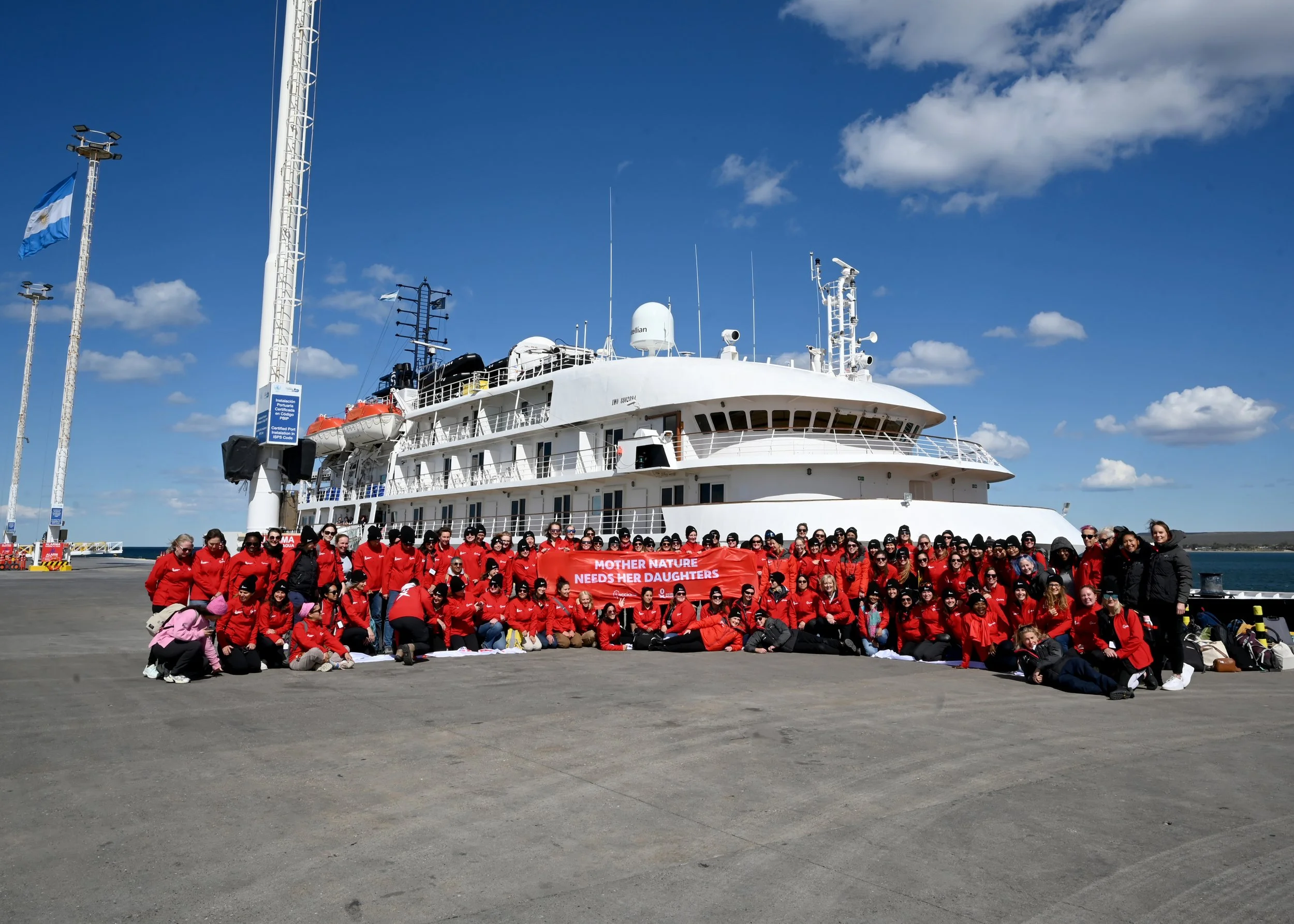
Image: Homeward Bound voyage to Antarctica in 2023 joined by Abeer, Tiffany, and Ximena | Image credits: Heidi Victoria
Following my expedition, I began exploring these questions further in a paper developed in dialogue with fellow expedition members, including Tiffany and Ximena. It was an attempt to think beyond preservation toward continuity, beyond borders toward systems. At a recent UNESCO side session on art and the cryosphere, this question became more concrete. I spoke about the possibility of moving beyond observation, toward experience as a form of participation. Not only asking artists to depict these environments, but to design encounters that invite responsibility. In parallel, I had already begun forming an international group of polar artists, though not yet activated.
What I began to notice was not absence, but dispersion.
A constellation of artists already exists, across geographies, disciplines, and practices, each engaging with the poles in their own language. And yet, they remain scattered across a vast and quiet universe. Perhaps what is needed is not creation, but connection. To bring these constellations into relation. To allow something collective to emerge.
Two Deserts: The Bedouin Wisdom of Belonging
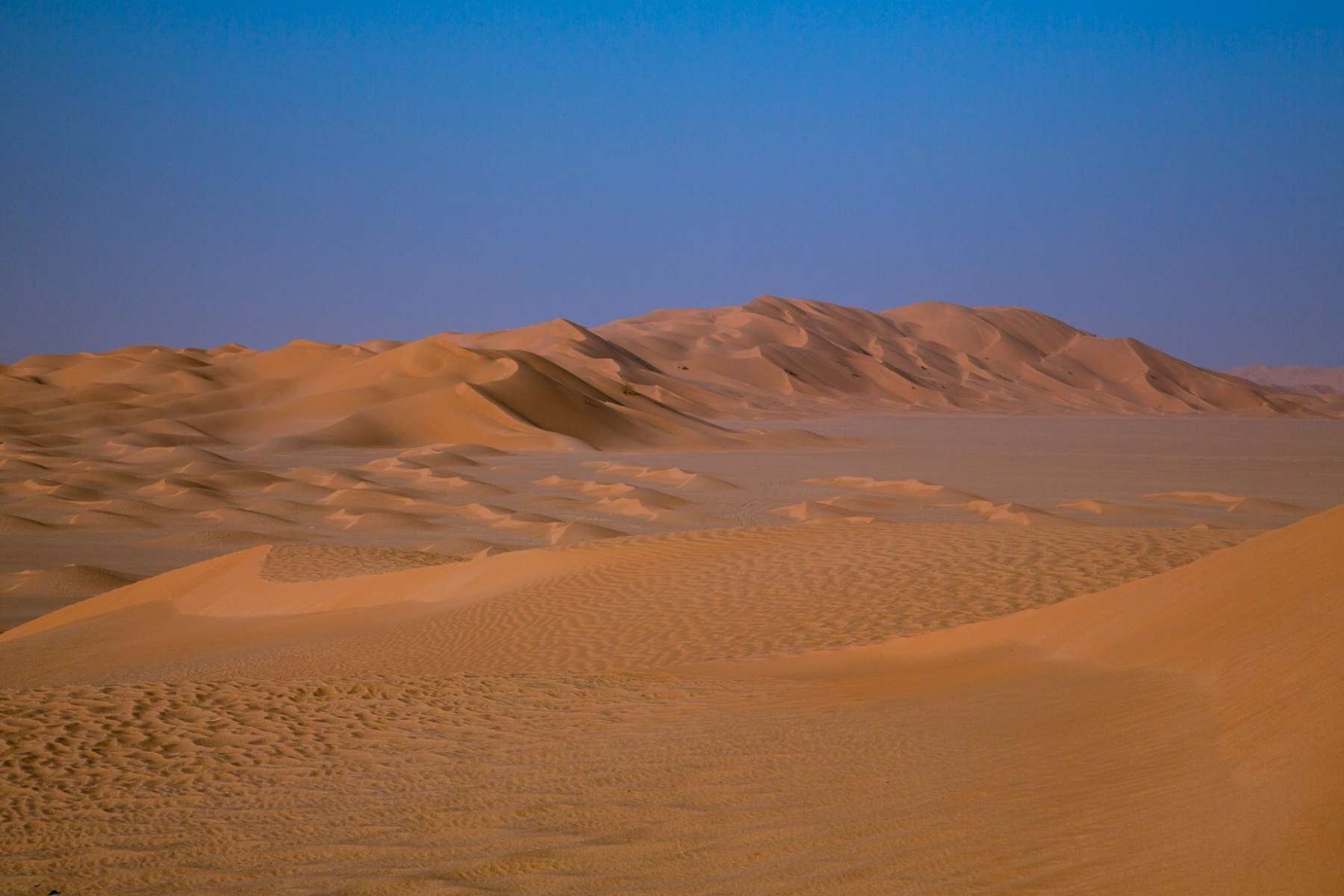
Image: Sand dunes in Rub’ al Khali desert | Image credits: Tanja Cotoaga |
We were once a species that drew lines. But in Antarctica, those lines dissolve. What remains is something more demanding, and perhaps more honest: relationship, responsibility, and the recognition that we belong to systems we are only beginning to understand.
Few realize that Antarctica is, in fact, the largest desert on Earth, a desert of ice. And elsewhere, the Rub’ al Khali, the Empty Quarter, stretches as the largest continuous sand desert. I have often thought of it differently. Not as empty, but as a kind of Gold Quarter, holding life, movement, and species that have learned to endure what appears uninhabitable.
Two deserts. One of ice. One of sand. Both misunderstood. Both alive.
Peace, in this century of glaciers, will not be negotiated at the edges. It will be designed within the system. Like those who have long crossed deserts understand, the land does not yield to us. We learn its rhythms, or we do not remain. There is a Bedouin understanding: that survival is not in resisting the landscape, but in reading it, in knowing when to move, when to wait,
and how to belong without possessing.
About Abeer
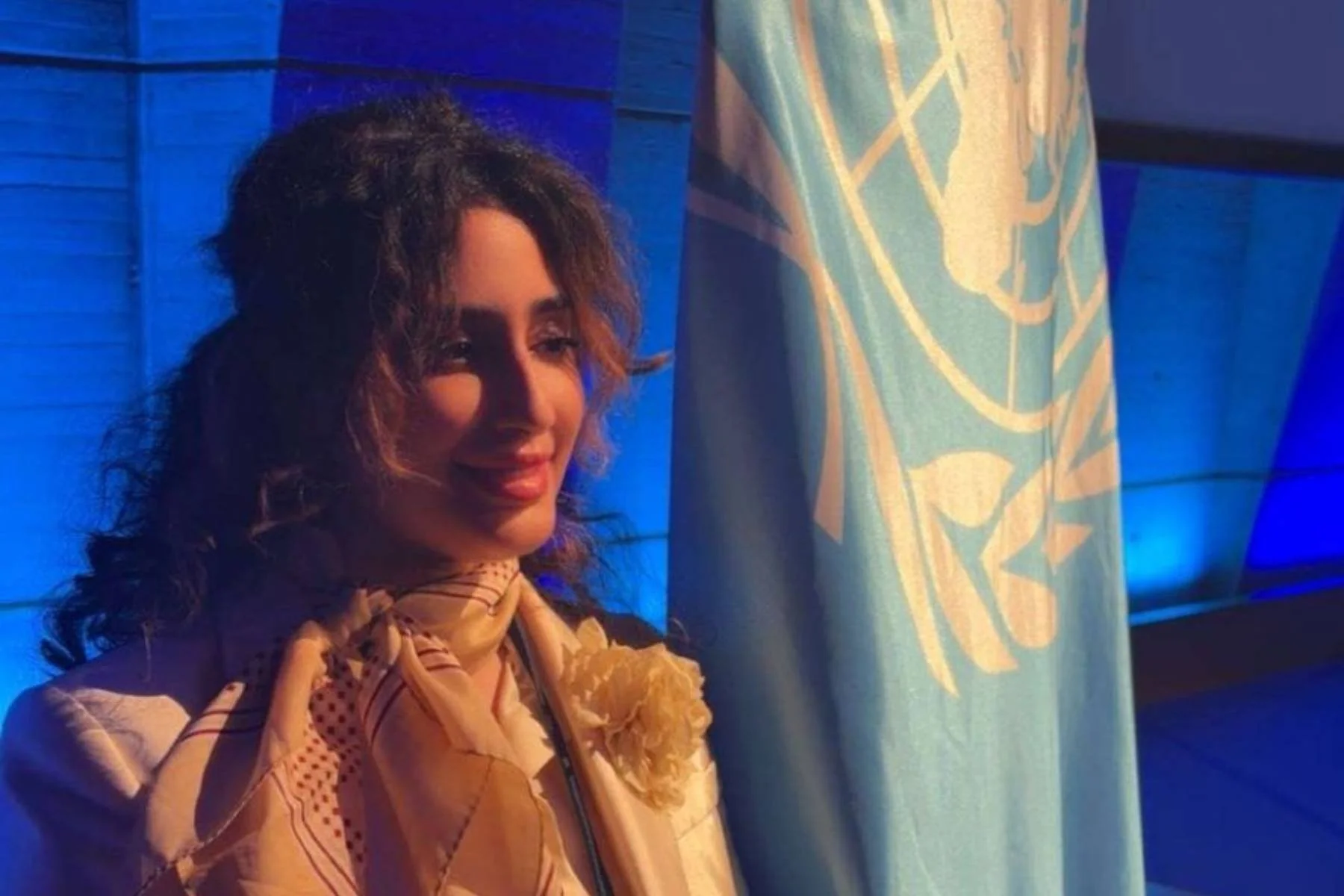
Abeer Al-Saud is a multi-hyphenate creative, explorer, and humanitarian dedicated to advancing sustainability and peace building. Her work spans science, art, and global development, with a focus on creating solutions that empower communities and healing the planet.
Watch her speak about peace building, purpose, and polar conservation. Read about her journey in this feature article by The National.
You can learn more about her through her website and connect with her on LinkedIn.
About Tiffany

Dr. Tiffany Vora speaks, writes, and advises on how to harness technology to build the best possible future(s). She is an expert in biotech, health, & innovation.
For a full list of topics and collaboration opportunities, visit Tiffany’s Work Together webpage.
Get bio-inspiration and future-focused insights straight to your inbox by subscribing to her newsletter, Be Voracious. And be sure to follow Tiffany on LinkedIn, Instagram, Youtube, and X for conversations on building a better future.
For the Curious and the Voracious
Subscribe to Be Voracious, Tiffany’s newsletter, for thoughtful conversations on science, innovation, and leadership, delivered straight to your inbox.

Buy Tiffany a Cup of Coffee | Image credits: Irene Kredenets via Unsplash.
Donate = Impact
If this article sparked curiosity, inspired reflection, or made you smile, consider buying Tiffany a cup of coffee!
Your support will:
Spread your positive impact around the world
Empower Tiffany to protect time for impact-focused projects
Support her travel for pro bono events with students & nonprofits
Purchase carbon offsets for her travel
Create a legacy of sustainability with like-minded changemakers!
Join Tiffany on her mission by contributing through her Buy Me a Coffee page.