By Dr. Tiffany Vora & Angela Flores
Image credits: Logan Voss | Unsplash
The World We’re Writing Into
Early this year, my content partner Angela and I began noticing something increasingly hard to ignore: bots (or at least bot-like accounts) were appearing more visibly across our social media pages. At the same time, conversations around agentic AI were moving from technical circles into the mainstream and into family conversations. Even Pope Leo XIV shared an encyclical on safeguarding humans in the time of artificial intelligence.
The digital landscape has changed significantly since we (Dr. Tiffany Vora and Angela Flores) first began working together in 2021, still in the COVID-19 era, and before ChatGPT and agentic AI became part of everyday workflows. Somewhere along the way, during one of our virtual coffee sessions, we realized: “We should write a reflection piece on AI-human collaboration, and write it together.”
That conversation became the starting point for this two-part series. In Part 1, we explore how AI has become woven into our science communication workflow and where it genuinely adds value. In Part 2, we turn to the harder questions of responsibility, accountability, and what should never be fully automated.
In a subsequent session, Angela arrived with a draft outline. We worked through questions, current debates surrounding AI, and the possibility of an internet increasingly populated by automated agents interacting with one another. We challenged each other’s assumptions, compared perspectives, and shared a few laughs about the parts of life that remain stubbornly and delightfully human. (Angela’s son likes to wave at Tiffany during our meetings.)
Of course, AI was present in the process as well. Our favorite note-taking tool, Otter, generated a clean transcript of the conversation, complete with a smiling otter icon that has since become associated with that session. It, too, became part of how this draft took shape.
AI in the Room
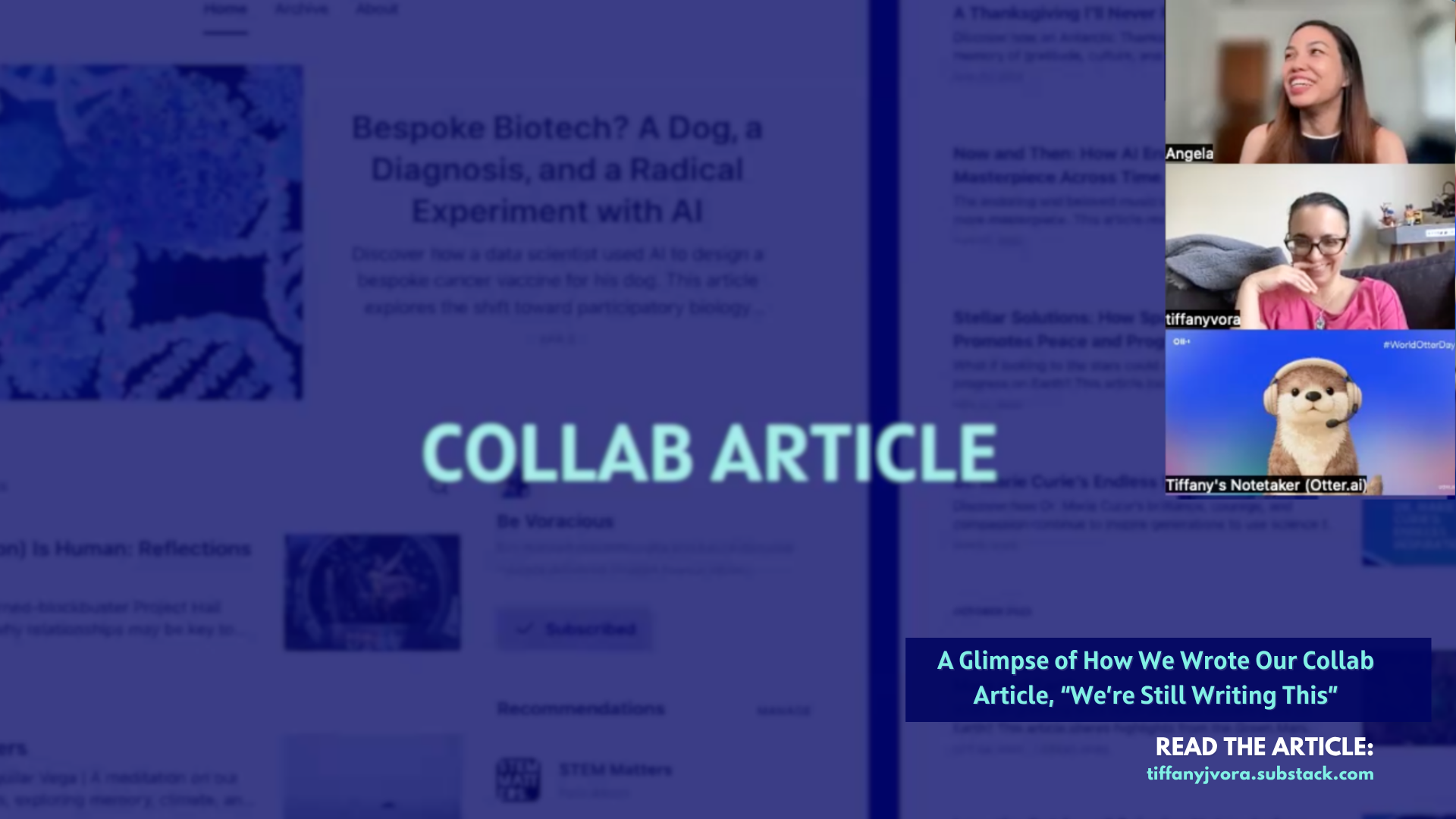
A behind-the-scenes glimpse of this article collaboration. In this particular moment, Tiffany and Angela shared a good laugh about AI and work, which Otter AI dutifully captured in the meeting transcript.
To us, it feels like AI is already threaded through the workflow of digital content. Angela in particular has been on the lookout for tools that help the two of us punch above our collective weight when it comes to cutting through the noise of the online sphere.
During one of our ruthlessly honest conversations, we stumbled into a question that we knew deserved more of our attention. We were both falling into this typical trap: “Well, AI can do lots of jobs, but it can’t do our jobs.” Of course not.
Right?
We knew that we had to stop right there. Is science communication different from other kinds of digital content in the age of AI? If so, what makes it different? How should we use AI to increase our productivity and our impact without compromising the values that make real science communication trustworthy?
A Question for Tiffany: Where does digital science communication stand today? And where can AI genuinely improve it?
Finding the Signal

I would say that the largest challenge to today’s digital science communication is the ability to cut through online noise to really reach the person consuming the content. We’re not short on science communication, including reliable science communication. We’re certainly not short on opinions—informed, expert, or otherwise. I’m particularly interested in ways that AI can (1) improve the reliability and trustworthiness of science communication, and (2) enhance the communicator’s ability to meet her audience where they are.
Thinking with AI
Naturally, I took this question to my ChatGPT environment to interrogate it before I sat down to write my answer. For me, writing is thinking; so is pre-writing. I come to my LLMs the way I would come to a human collaborator, expecting to improve my own thinking through the interaction. Since I’m doing a kind of meta-thing here—using my own process to hone my thinking about process—I invited ChatGPT running on OpenAI GPT-5.5 to come up with a nickname for itself.
After some back and forth, we settled on Kep. Short for Kepler, of course.
Kep and I dug into the difficult jobs faced by science communicators today, including curation (what’s actually worth thinking, writing, and reading about?), translation (IMO the hardest part of a science communicator’s job), and trust-building (IMO the most important part of a science communicator’s job). Kep offered a few analogies of AI to scientific tools, which I ignored. When we got into a discussion about the failure modes of humans versus AI, I may have been a bit hard on Kep regarding sycophancy. Nonetheless, I stand by my point. I will return to it, too.
We circled back (inevitably, perhaps) to what I think is the main value-add of AI in science communication: the opportunity for the communicator to strengthen her thinking before she sits down to create content.
What are Readers Really Trusting?
Image credits: Embed Social | Unsplash
You, the audience, are trusting me, the communicator, to apply my intelligence, my education, my experience, and my judgment to guide you toward information and ideas that are worth your time. I could fail at any one (or any combination) of those steps if I fail to root out my own assumptions, biases, and blind spots. If I fail to relentlessly ask the key question from my time in grad school: “What is fact, and what is interpretation?” If I fail to consider your context, your values, your concerns—and instead default to mine.
Enter the AI.
What is AI Actually Good At?
Kep and I landed at something like this: Human exercises judgment → AI interrogates that judgment → Human refines it → AI helps communicate it. Kep used the phrase “epistemic self-critique” to describe what we’re pursuing: stress-testing the communicator’s thinking. Epistemic basically means how we know what we know.
Here’s the text that Kep suggested I include in this answer: “The greatest opportunity for AI in digital science communication is not that it can help us write more science content. It is that it can help us produce better science communication by improving the quality of our own reasoning. Used well, AI becomes less a content generator than a cognitive instrument—one that interrogates assumptions, surfaces blind spots, challenges overconfidence, and pressure-tests arguments before they reach an audience. In an information ecosystem overwhelmed by noise, the future of science communication may depend less on automating communication itself than on augmenting the judgment of the humans who communicate science.”
Well said, Kep. Well said.
A Question for Angela: AI seems to be in (almost) every step of the content workflow. Where does the human come back into the loop?
There’s a time and place for pirate poetry, and for Ghibli-inspired profile photos, but when it comes to digital content for science communication, I believe that the human-AI dynamics should be more intentional, less go with the flow.
The Human Owns the Outcome
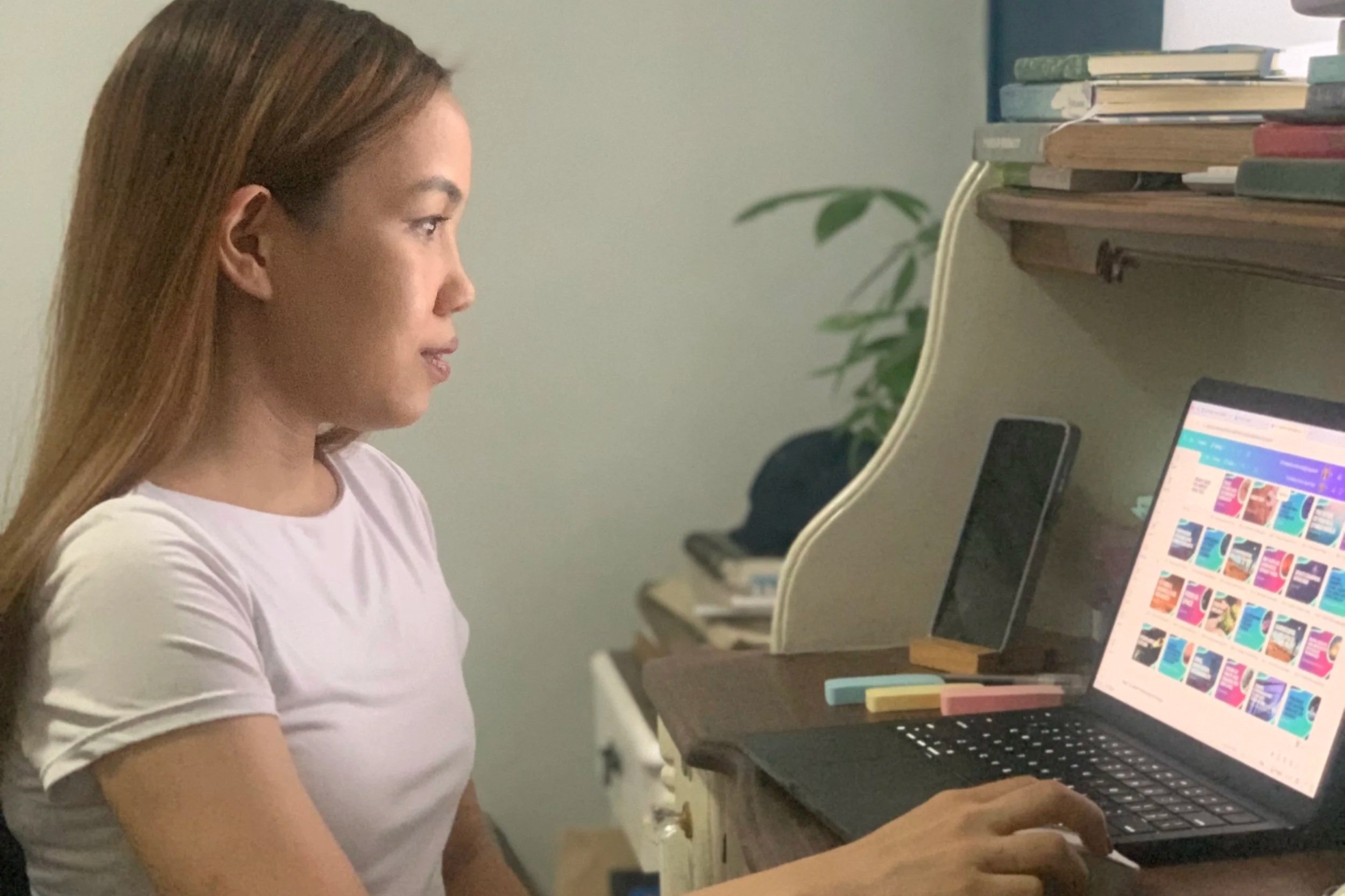
Angela organizing and reviewing digital content assets before publication.
As a digital content professional, especially in a role that involves communicating science, the human is responsible for two things: 1) deciding what AI and digital tools get included in the content workflow, and 2) taking responsibility for whatever content ultimately goes out into the world. The first one is a bit more straightforward, the second one is more complicated.
Some content requires only a tiny bit of AI support, and in some cases, no AI support at all (that's perfectly fine). Other pieces, however, go through multiple AI-assisted iterations. The level of AI involvement depends on the work itself. Sometimes the goal is to clarify an idea, other times to brainstorm content angles, and in some occasions to ensure I’m capturing the science correctly (did Tiffany really say Caenorhabditis elegans or was it something else?).
Each iteration and layer of AI support serves a different purpose, but the responsibility for the final piece always remains with me.
What does it look like in practice? In the past months, I’ve leaned into AI tools to generate content drafts, organize information, speed up repetitive tasks, or TBH, delegate tasks that are just painfully tedious for humans (case in point: hour long transcriptions that that would take a half day to process, but only takes Turboscribe and Kapwing a hot minute to generate).
While there’s no blanket rule for how digital communicators should use AI tools, my mindset is to make sure that our content is accurate, that the language aligns with what our brand stands for, and that the final result genuinely adds value to the reader. I can fall short, but sharing factual and brand-aligned content is what I strive for with the best of my human abilities and vetted AI tools.
Making Time for Better Thinking
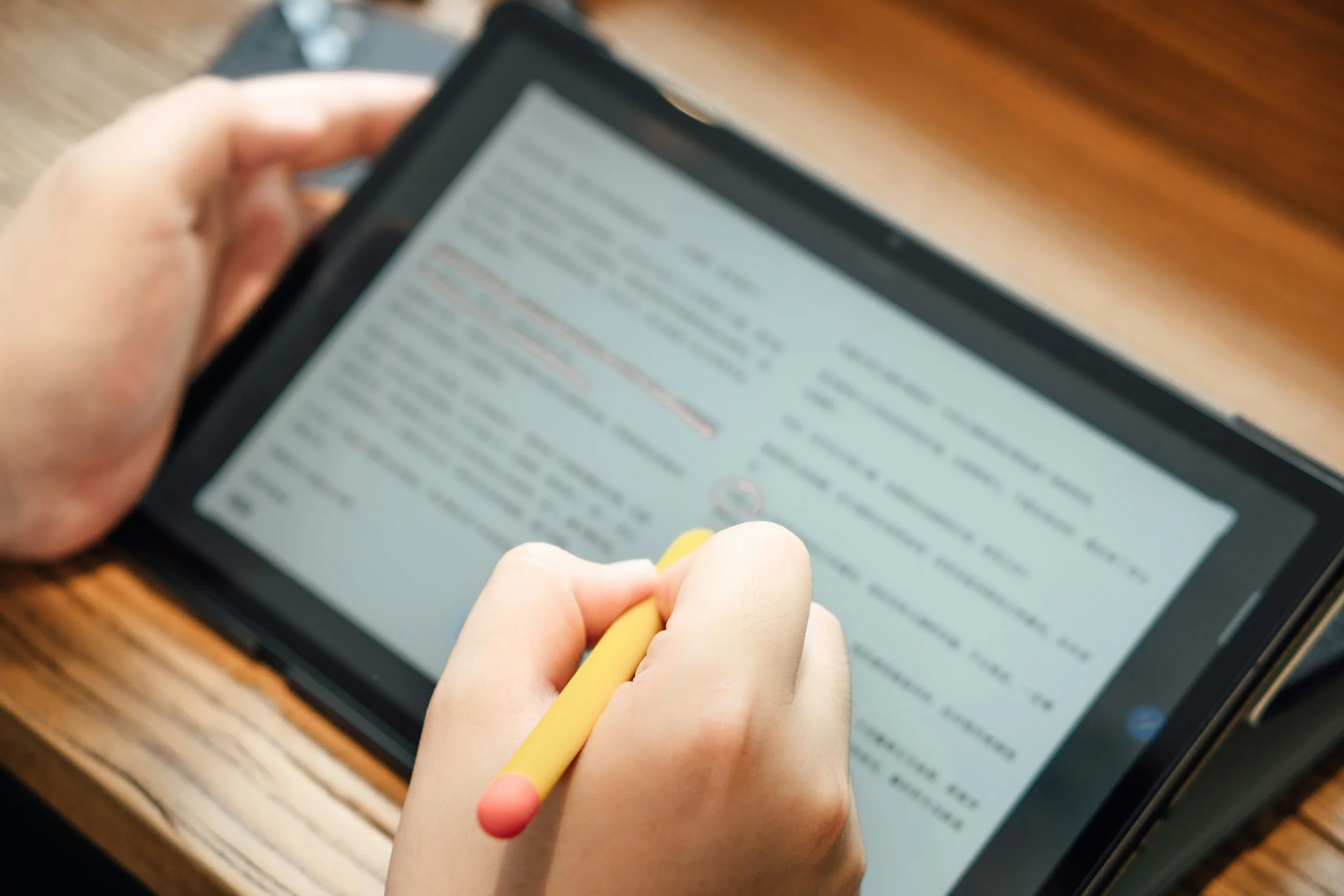
Image credits: Shawn Rain | Unsplash
Looking back at the transcript of our conversations for this article, I see that Tiffany and I both share this thought: when we think about AI as being helpful for productivity, what we're saying is we can move faster. But going faster isn't necessarily better, especially if our goal is to get things right before getting it out the gate.
In our workflow, AI can handle certain tasks fast, but the true value of that efficiency is giving humans the space to slow down where it matters most. A fast transcription frees up time for deeper research, clearer thinking, and more thoughtful editing.
The Human Difference
As we worked through these questions, one thing became clear: AI is no longer sitting outside the room. It is already part of the conversation, helping us organize ideas, challenge assumptions, and refine our thinking.
But partnership is not the same as surrender. Every draft still passes through human judgment, human accountability, and human values before it reaches another person.
In Part 2, we’ll tackle these questions: What should never be automated in science communication? Where do human checkpoints matter most? And what kind of human qualities become more valuable as AI grows more capable?
About Tiffany

Dr. Tiffany Vora speaks, writes, and advises on how to harness technology to build the best possible future(s). She is an expert in biotech, health, & innovation.
For a full list of topics and collaboration opportunities, visit Tiffany’s Work Together webpage.
Get bio-inspiration and future-focused insights straight to your inbox by subscribing to her newsletter, Be Voracious. And be sure to follow Tiffany on LinkedIn, Instagram, Youtube, and X for conversations on building a better future.
For the Curious and the Voracious
Subscribe to Be Voracious, Tiffany’s newsletter, for thoughtful conversations on science, innovation, and leadership, delivered straight to your inbox.

Buy Tiffany a Cup of Coffee | Image credits: Irene Kredenets via Unsplash.
Donate = Impact
If this article sparked curiosity, inspired reflection, or made you smile, consider buying Tiffany a cup of coffee!
Your support will:
Spread your positive impact around the world
Empower Tiffany to protect time for impact-focused projects
Support her travel for pro bono events with students & nonprofits
Purchase carbon offsets for her travel
Create a legacy of sustainability with like-minded changemakers!
Join Tiffany on her mission by contributing through her Buy Me a Coffee page.
Our Editorial Process
We believe AI is most valuable when it strengthens human thinking rather than replaces it. Throughout our editorial workflow, we use AI to transcribe conversations, organize information, brainstorm, challenge assumptions, improve clarity, automate repetitive tasks, and pressure-test our reasoning before publishing.
Editorial responsibility remains ours. AI helps us think, write, and work more effectively, but judgment, accountability, and our relationship with readers remain human.