Book Recommendation: A World Appears by Michael Pollan
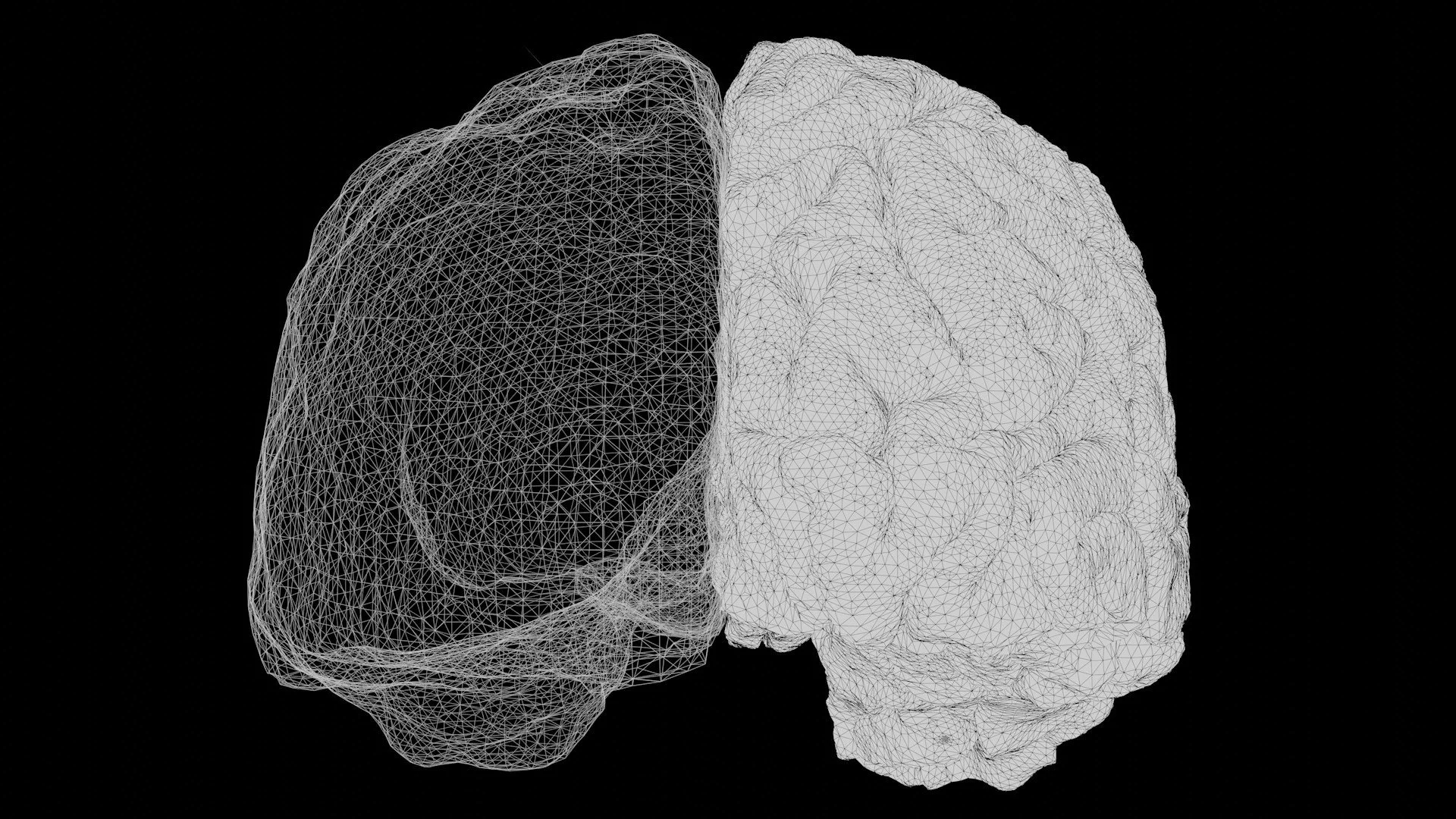
Image credits: Shawn Day | Unsplash
Every once in a while I find a book that doesn’t try to solve a mystery so much as walk the reader deeper into it.
Michael Pollan’s A World Appears: A Journey into Consciousness is that kind of book. It explores one of the most enduring questions in science and philosophy: how matter arranged in a particular way—neurons, chemistry, electrical signals—gives rise to the vivid interior world each of us experiences.
Neuroscience has made remarkable progress mapping the brain. Researchers can trace the circuits behind perception, memory, and decision-making. Yet one question stubbornly remains: why does any of this activity feel like something from the inside? Philosopher and cognitive scientist David Chalmers famously called this the “hard problem” of consciousness, and Pollan uses it as the entry point for a wide-ranging exploration of competing ideas about mind and experience.
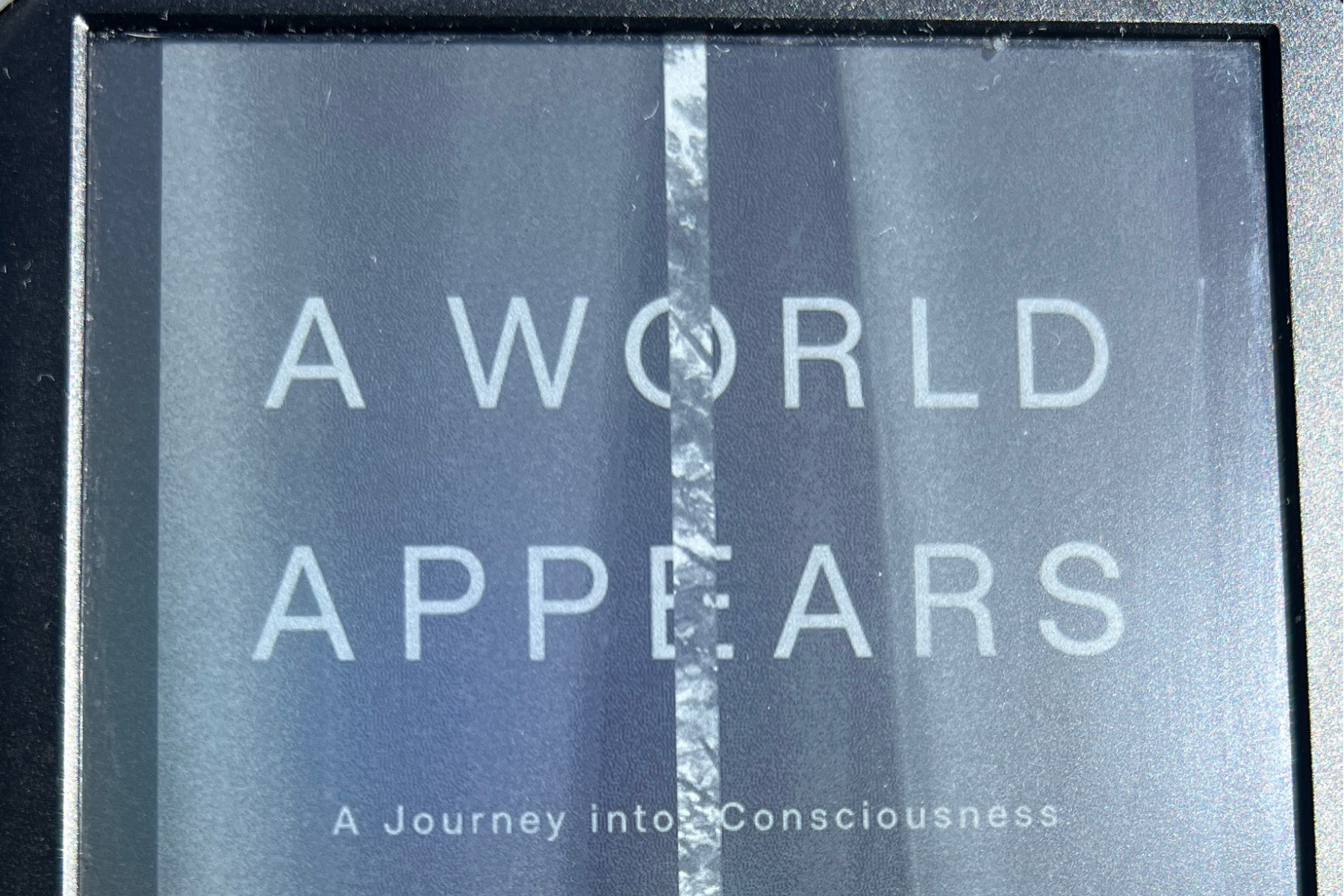
From my digital library: A look at the e-book cover of A World Appears by Michael Pollan | Tiffany Vora
This book isn’t compelling because it delivers a single answer. Spoiler alert: it doesn’t! Rather, I found this book remarkable due to Pollan’s willingness to explore many ways that scientists and philosophers are trying to approach the problem.
A quick note on semantics. In this discussion, I’m going to try to reserve the word “brain” to refer to the physical organ in the body and “mind” to refer to the set of processes and experiences that arise from it. And I’ll use the word “consciousness” to mean the presence of subjective experience (that it’s “like something”, an inner point of view). Yes, I’m already in trouble here! Let’s at least take this as our starting point and see where it leads us.
Where Consciousness Might Begin

Image credits: Mary Ray | Unsplash
Pollan begins not with human awareness but with something more fundamental: sentience, the ability of a living system to sense its environment and respond in ways that help it survive. Seen this way, consciousness might lie on a continuum that stretches across the living world, rather than being something special to humans.
Plants offer a striking example. Though they lack brains, they constantly sense their environment and adjust their behavior by tracking light, responding to chemical signals, and allocating growth where conditions are improving. Some experiments even suggest plants respond to the direction of environmental change, not just the present state.
For someone like me, who often looks to biology for inspiration, this framing feels both humbling and expansive. Life has had billions of years to develop ways of sensing and responding to the world. Consciousness as we recognize it may be just one expression of that long evolutionary process.
Intelligence Without a Commander
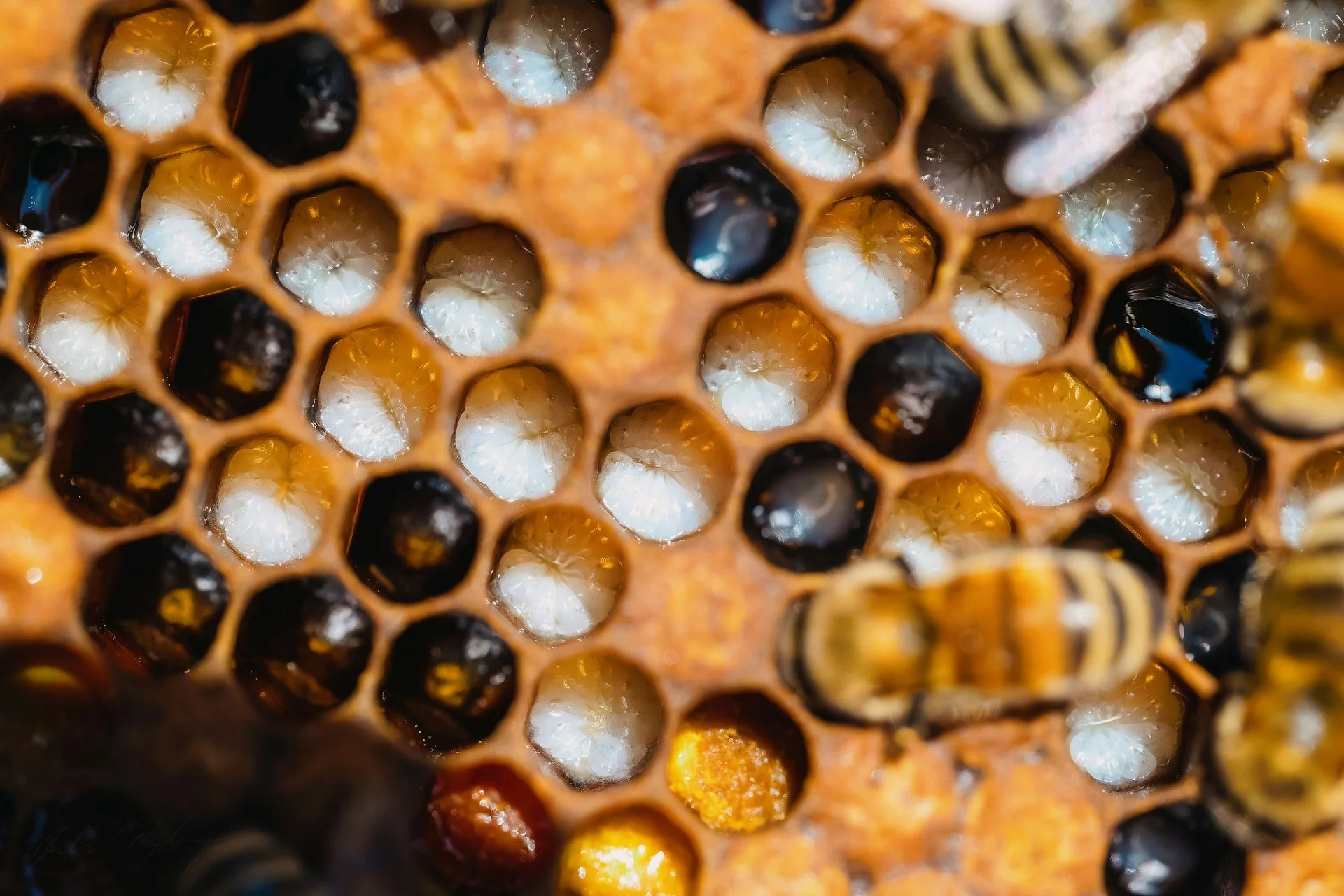
Image credits: Jordan Ryskamp | Unsplash
Pollan also highlights research suggesting that intelligence can arise in places we might not expect. Certain biological systems (networks of cells without neurons) can organize themselves and display coordinated, goal-directed behavior. These findings challenge the assumption that intelligence requires centralized control. Instead, biological intelligence often emerges from distributed networks of interacting parts.
Even the brain itself may function less like a command center than like a dynamic network whose coherence emerges from interactions among many components. This is a fairly well-accepted idea in neuroscience, and it’s one I’m examining elsewhere in relation to how we architect artificial intelligence. Stay tuned for that!
From a biological perspective, this pattern is familiar. Many of nature’s most robust systems—from immune systems to ecosystems—operate without a single controlling authority. Order arises from interaction.
The Mind as a Prediction Machine
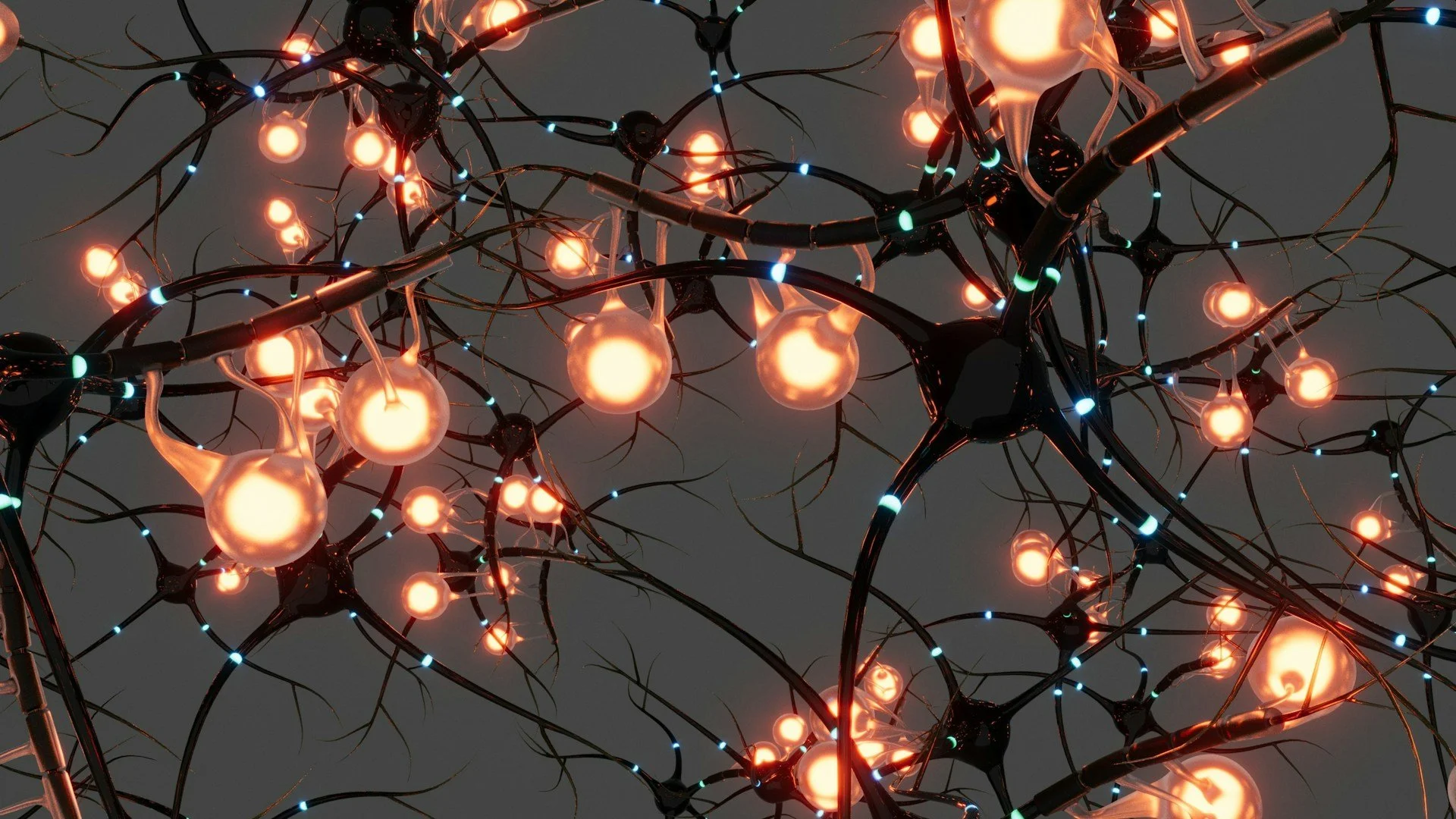
Image credits: Bhautik Patel | Unsplash
Another powerful idea Pollan explores comes from modern neuroscience. Should we think of the brain as primarily a prediction “machine”?
Rather than passively recording the world, it seems that the mind constantly generates expectations about what is happening around us. Sensory input channeled through the brain then acts as a corrective signal, updating those predictions when they diverge from reality. In this view, perception is not a simple window onto the world. It is an evolving internal model that the brain continuously refines.
Uncertainty, therefore, plays a central role. When the world becomes unpredictable, attention sharpens and consciousness intensifies. Life must continually interpret signals and adjust its predictions in order to survive.
What About Artificial Minds?
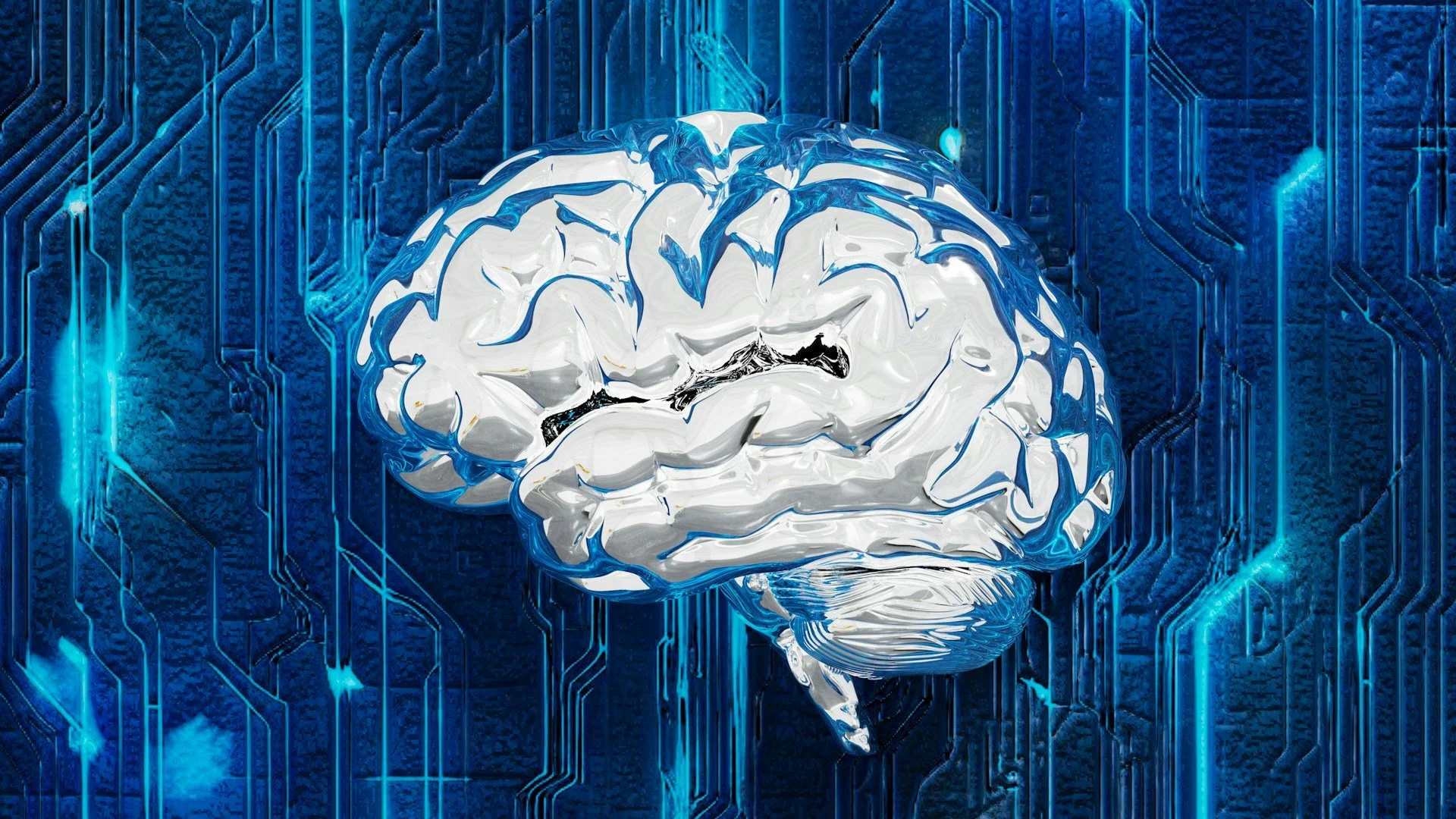
Image credits: Ecliptic Graphic | Unsplash
Unsurprisingly, Pollan also turns to artificial intelligence (AI), asking whether consciousness could eventually arise in nonbiological machines.
Some scientists believe it might. If consciousness depends mainly on particular patterns of information processing, then the right architecture might produce it, including in silicon.
Pollan is more cautious. Human minds develop through embodied interaction with the world and with other living beings. Today’s AI systems, by contrast, are trained primarily on data drawn from the internet—a representation of human culture rather than direct experience of reality. Pollan describes this digital environment as something like a shadow cast by the real world (remember Plato?).
If that distinction matters, then artificial minds may still have a long way to go. Either way, we probably should be devoting some pretty serious thought to what may become possible in the coming years … and what responsibilities we might owe to our creations. Now would be a great time to (re)read Mary Shelley’s Frankenstein, friends.
Living with the Mystery
Image credits: Merrilee Schultz | Unsplash
What I appreciated most about A World Appears is that Pollan resists the urge to impose a tidy conclusion. After exploring neuroscience, philosophy, meditation, psychedelics, biology, and AI, he suggests that consciousness might not be only a scientific problem to solve. It may also be something to practice, to encounter through attention and presence.
That perspective resonated with me.
The more we learn about life, the more we discover that it operates through relationships, feedback loops, and improvisation across many scales. Consciousness may be one of the ways life experiences itself participating in that unfolding. Which might explain why the “hard problem” refuses to go away.
Every time we try to explain consciousness, we rediscover something just beyond the edge of explanation. Not merely that a world exists around us, but that somehow, through the strange alchemy of life and mind, when we open our eyes, a world appears. We move through that world. We experience it. We suffer. And we feel love, joy, and awe.
About Tiffany

Dr. Tiffany Vora speaks, writes, and advises on how to harness technology to build the best possible future(s). She is an expert in biotech, health, & innovation.
For a full list of topics and collaboration opportunities, visit Tiffany’s Work Together webpage.
Get bio-inspiration and future-focused insights straight to your inbox by subscribing to her newsletter, Be Voracious. And be sure to follow Tiffany on LinkedIn, Instagram, Youtube, and X for conversations on building a better future.
If this article sparked your curiosity, you might want to explore these additional resources:
💡 Is There a Future Where AI Can Be Conscious? | Read my reflection piece here
💡Book Recommendation: How to Change Your Mind by Michael Pollan | Read the book review here
💡 Book Recommendation: This is Your Mind on Plants by Michael Pollan | Read the book review here
For the Curious and the Voracious
Subscribe to Be Voracious, Tiffany’s newsletter, for thoughtful conversations on science, innovation, and leadership, delivered straight to your inbox.

Buy Tiffany a Cup of Coffee | Image credits: Irene Kredenets via Unsplash.
Donate = Impact
If this article sparked curiosity, inspired reflection, or made you smile, consider buying Tiffany a cup of coffee!
Your support will:
Spread your positive impact around the world
Empower Tiffany to protect time for impact-focused projects
Support her travel for pro bono events with students & nonprofits
Purchase carbon offsets for her travel
Create a legacy of sustainability with like-minded changemakers!
Join Tiffany on her mission by contributing through her Buy Me a Coffee page.